

Biomechanical run analysis · Aberdeen
Run faster.
Stay injury-free.
Small flaws in your stride add up over thousands of steps. Our coaches have years of experience analysing endurance runners. We find what is actually holding you back, explain why it is happening, and show you the few changes that will make the biggest difference.
Expert, coach-led analysis · Root cause, not symptoms · A focused plan, not a list of 20 exercises
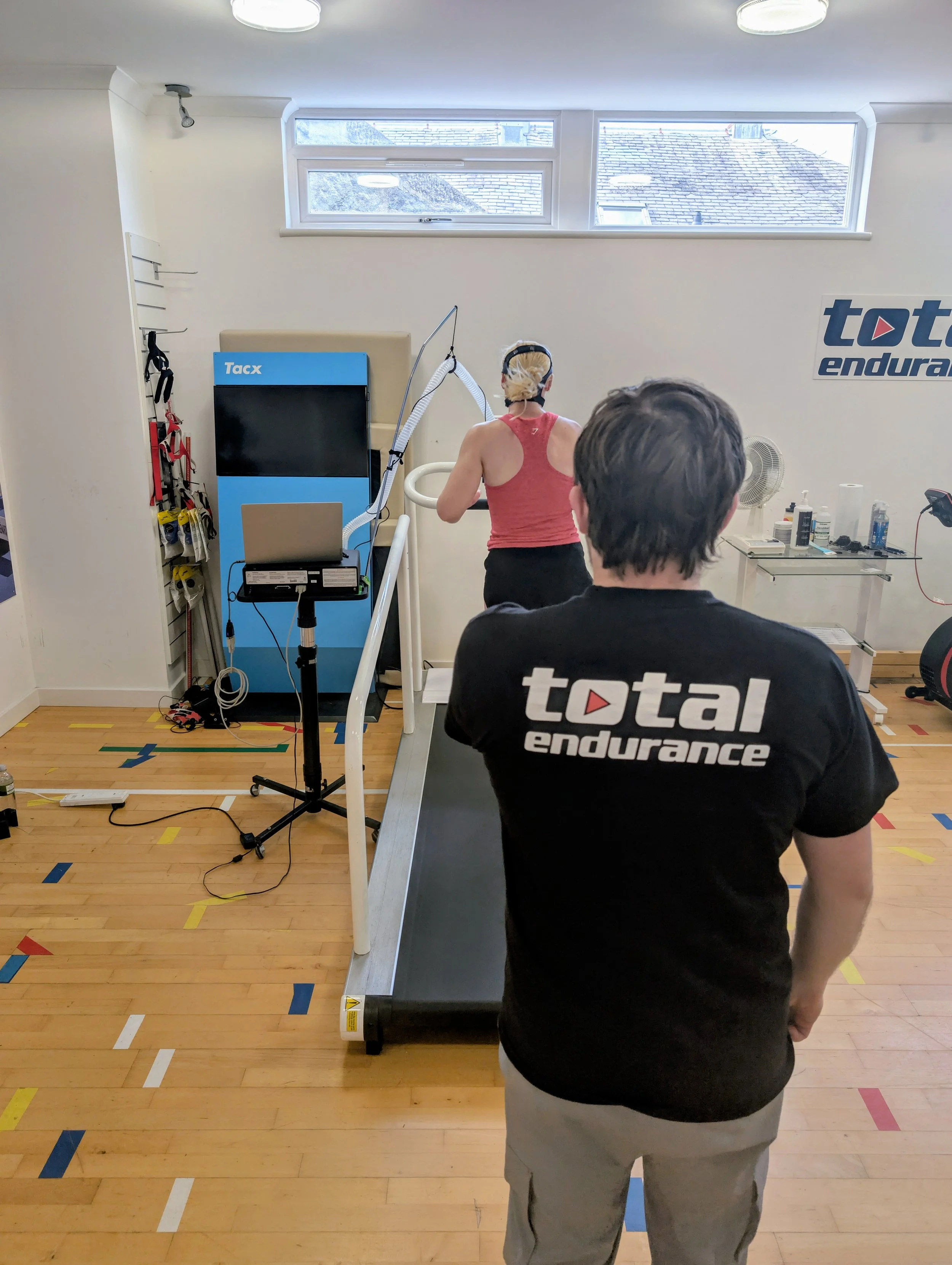
We look past the symptom to the movement pattern that is causing it.
Foot contact, knees, hips, trunk and arms, assessed together as one system.
The two or three changes that matter most, not a long list of generic drills.
A follow-up analysis to show the changes have stuck.
You can’t see your own stride
Most runners have never watched themselves run. Overstriding, a dropping hip or a collapsing knee can feel normal. They still cost energy on every step, and they often show up later as a niggle that won’t go away.
Guesswork
- Generic “run tall” cues with no way to check them
- Treating the injury, not the movement behind it
- A sheet of 20 exercises you never get through
With analysis
- An experienced coach who knows what to look for
- The root cause of recurring niggles, found and explained
- A few targeted changes that fit around your training
- Re-test to prove the change has stuck

Every part of your stride
We watch you run at easy and harder paces, then talk you through what we see. Our experience lets us connect what happens at your feet to what is going on at your hips and trunk. That link is where most problems really start.
Told to shorten your stride?
Heel striking and overstriding are easy to spot, and the usual advice is to take shorter steps. For many runners that just makes them slower, especially if their stride is already short. The landing is usually a symptom. The cause sits further up the chain.
Shorten your stride
This treats the symptom. You cover less ground with each step, lose speed, and often still land in the same way.
Drive from the hips
Better hip extension and using your glutes to push you forward, supported by stable hips. Your foot then lands closer to your body naturally, and you keep your stride.
Run further with less effort
Better mechanics mean less wasted energy and less strain on your body. That leads to more consistent training, and consistent training is what makes you faster.
Prevent injury
Spot the imbalances behind overuse strains and joint stress before they stop your training.
Improve efficiency
Fine-tune your technique so more of your effort moves you forward.
Focused advice
A small number of changes chosen for how you move. They are easy to remember and easy to fit into your week.
Faster times
Better running economy means better endurance and quicker times for the same physical cost.
What happens on the day
Your story
Your running history, injuries, goals and upcoming races.
Warm up
Settle into your natural running on the treadmill.
Assess
We watch you at different paces and see how your form changes.
Explain
We walk you through what we found and why it is happening.
Action plan
Clear priorities and cues you can use on your next run.
Built for every runner
Marathon & road runners
Hold your form late in the race, when fatigue starts to break your technique down.
Triathletes
Run efficiently off the bike and save energy for the final kilometres.
Returning from injury
Find the movement pattern behind the injury so it doesn’t come back.
Trail & ultra runners
Build robust mechanics that hold up over long days on rough ground.
Choose your analysis
Every option starts with the same full biomechanical analysis. Choose how much support you want afterwards.
Biomechanical Analysis
A full picture of how you run and what to fix first.
- Coach-led assessment of your running technique
- Inefficiencies, asymmetries and injury risks identified
- Expert feedback during the session
- Your top priorities and cues to take away
Analysis + 12-Week Plan
Turn your results into a structured improvement plan.
- Everything in Biomechanical Analysis
- Personalised 12-week improvement plan
- Targeted work on hip drive, stability and strength
- Build better mechanics over time
Analysis, Plan + Follow-Up
For runners who want measurable, lasting improvement.
- Everything in Analysis + 12-Week Plan
- Plan targeted at your key limiters
- Follow-up analysis to measure progress
- Technique refined from your new baseline
Not sure which option suits you? Get in touch and we’ll point you in the right direction.
“After my analysis, I made small adjustments that made a huge difference.”Mark T · Run analysis client
Pair it with run testing
Run analysis shows how you move. Run testing with running economy shows what that movement costs you. Do both and you get the complete picture of your running.
How you move
- Stride, foot strike and hip drive
- Stability and asymmetries
- Injury risks in your technique
What it costs you
- How efficiently you use oxygen
- Your running economy
- Where you break down under fatigue
The full picture
- See whether your form is wasting energy
- Know what to fix first, and why
- Measure the gain when it works
Your analysis is the starting point
Knowing what to fix is step one. The runners who improve most use their results in a structured plan, with a coach checking the changes hold up under training load.
Find out how you move and where you lose energy.
Add physiology to see how your engine copes as fatigue builds.
Turn both into a plan, adjusted week by week.
Run Testing + Running Economy
Combine your movement with oxygen use and running economy. You will see where your running breaks down under fatigue and what to do about it. Ideal for marathon, Ironman and ultra runners.
Explore run testing1-2-1 Coaching
Your coach builds your technique work, strength and training around your analysis results, then re-tests to make sure it is working. One team and one plan, built around your goals.
Explore coachingBefore you book
Do I need to be an experienced runner?
No. The analysis helps beginners and experienced runners alike. Fixing your mechanics early is one of the best ways to stay injury-free as your training builds.
I’ve been told to shorten my stride. Should I?
Not necessarily. Overstriding is usually a symptom, not the cause. Shortening your stride often just makes you slower, especially if it is already short. The fix is usually better hip extension, using your glutes to drive you forward, and more stable hips. We will show you which applies to you.
Will I get a long list of exercises?
No. We give you the few changes that will make the biggest difference for you, explained so you understand why they matter. Less to remember means you will actually do it.
Can it help with a current injury?
Yes. The analysis often shows the movement pattern behind recurring niggles. For an acute injury we recommend you see a physiotherapist first, then use the analysis to stop it coming back.
Can I combine it with run testing?
Yes. Pairing run analysis with run testing and running economy shows how you move and what that movement costs you in oxygen use and running economy. Get in touch and we will help you combine them.
What should I bring?
Bring the shoes you normally train in and fitted running kit, such as shorts and a fitted top, so we can see your movement clearly. If you rotate between shoes, bring both pairs.