

Why This Runner Looks “Efficient”… but Is Burning Through Carbs Faster Than Expected
From a recent run testing session we came across an interesting scenario: a runner who’s got a great running economy but still ends up burning through carbohydrates faster than expected. Let’s look into what that means and how they can improve this.
Understanding the Data: A Tale of Two Graphs
One graph showed a steep rise in carbohydrate use as pace increased, with carbs peaking at around 3.4 grams per minute (that’s about 204 grams per hour) even before hitting threshold pace. At the same time, another graph showed that this same runner had a good running economy, needing less oxygen at each pace.
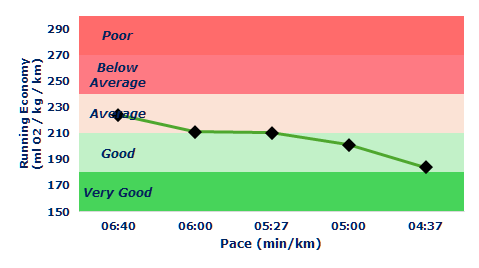
Graph 1: Running economy - amount of oxygen required to cover 1km
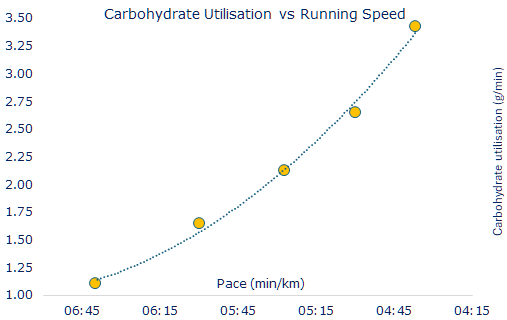
Graph 2: Carbohydrate utilisation rate in grams per minute
Low oxygen demand isn’t always a good thing.
Usually we would want a lower oxygen demand at a given pace as it usually means you’re more efficient and therefore have better endurance. But here’s the twist: low oxygen demand isn’t always beneficial. When you don’t take in enough oxygen, your body struggles to oxidize fat effectively, even at moderate speeds. Instead of tapping into the larger, more sustainable fuel source (fat), you end up relying heavily on carbohydrates.
The result?
Strong at steady, “plodding” paces
But struggle to push faster before CO₂ rises
Early shift into high carbohydrate use
Higher fuelling needs in training and racing
Limited ability to change gears or sustain pace increases
It’s a metabolic ceiling issue, not a technique issue.
The Fix: Build the Engine, Not Just the Stride
To improve speed and reduce carb reliance, the aerobic system needs to be developed so it can deliver, utilise, and sustain more oxygen — allowing greater fat oxidation at faster speeds.
VO₂max Development
Increase the size of the aerobic engine so fat oxidation remains available as pace increases.
Fat-Max Training
Zone 2 work + progressive aerobic volume shifts the point where carbs take over.
Long Aerobic Work + Tempo Progressions
Teaches the body to hold higher outputs without flipping early into carb-burning mode.
With the above, you’d expect to see:
Ability to maintain speed longer
Reduced reliance on carbs at race pace
Lower fuelling requirements
Ability to push faster without hitting the CO₂ wall
Breaking out of the classic “one pace” trap
And importantly:
Running economy may initially look worse because oxygen uptake increases — which is good!)
But you’ll be able to run faster, for longer, before CO₂ rises.
Turn Your Own Data Into Better Running
If you’re looking to gain real insight into your own endurance running profile — to identify what’s currently limiting your progress and receive detailed, actionable training tailored to your physiology — our Endurance Running Assessment can help.
We analyse how you use oxygen, where your thresholds sit, how efficiently you burn fat and carbohydrate, and how these factors affect your speed, pacing, and long-run performance.
If you want clarity on what’s holding you back and a clear plan for how to improve, get in touch and we’ll guide you through the next steps.