

Metabolic & Lactate Testing
Your Physiology Has the Answers.
This Test Finds Them.
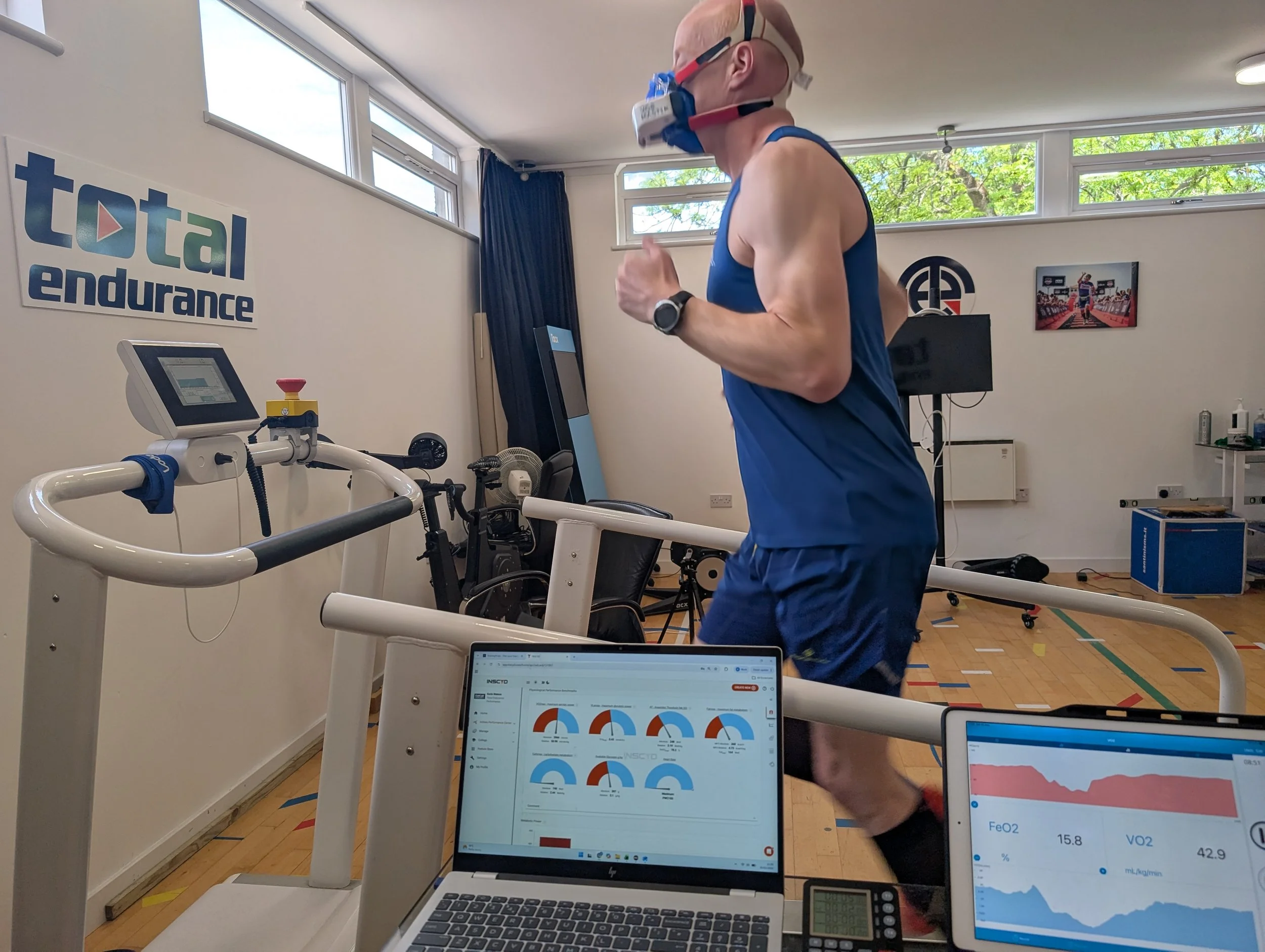
Most athletes train for years without ever knowing what's actually limiting them. This isn't another fitness test. It's a complete picture of your metabolic engine — and a precise roadmap for improving it.
Used by Tour de France teams and Ironman champions
Why most athletes plateau
Training hard isn't the problem.
Training without data is.
Most endurance athletes are working incredibly hard. Early mornings. Consistent miles. Race after race. And yet performance plateaus. Progress stalls. Race day never quite delivers what training suggested it could.
The reason, in most cases, isn't effort. It's information. Zones built from a 20-minute estimate. Nutrition based on general advice. Race pace estimated — or by what worked for someone else.
Your physiology isn't average. So why is your training based on averages?
The measurements
Five values. A Complete picture of your engine
Each measurement tells us something different. Together they explain exactly how your body produces and uses energy - and what needs to change to make you faster.
VO2MAX
Aerobic ceiling
Your maximum rate of oxygen uptake. The ceiling of your aerobic engine - but not the only thing that determines how you race.
VLAMAX
Glycolytic power
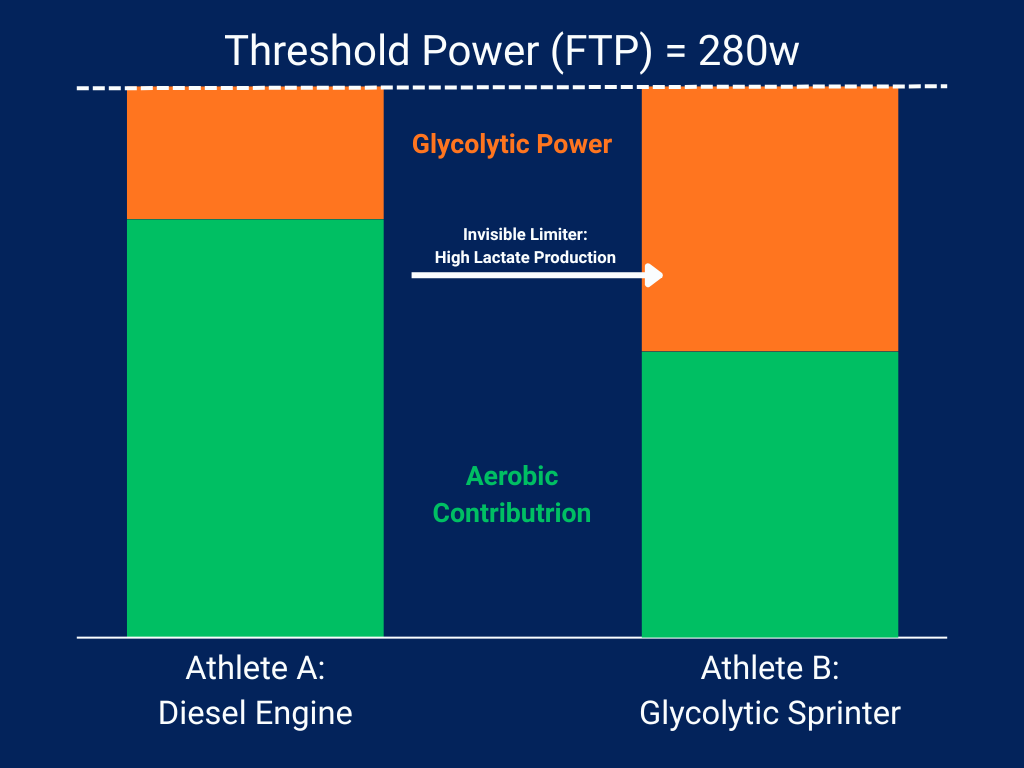
How fast your body produces lactate. Too high for endurance events and you burn through carbohydrates before the finish line
MLSS
Maximum Lactate Steady state
The highest intensity you can sustain without lactate accumulating. Your true functional threshold.
FATMAX
Peak Fat Oxidation
The intensity at which you burn fat most efficiently. A key marker of metabolic health and endurance capacity, especially over longer distances.
OXYGEN & LACTATE KINETICS
How your engine responds and recovers
The speed at which your aerobic system activates, and how quickly your body clears lactate between intense efforts. These kinetics determine how you perform in real race conditions - not just steady-state tests
The most common thing we hear
“I’m not an elite athlete - is this really worth it for me?”
Here’s the honest answer: Elite athletes have coaches, physios and support staff analysis their training every day. You probably don’t. Which means this test matters more for you, not less.
The difference between an elite and an age-group athlete isn’t one needs precise training the other doesn’t
WHAT CHANGES AFTER YOUR TEST?
You stop doing sessions and hoping they work
Every session in your plan is tied directly to a physiological marker for your profile. You know exactly which value its targeting and why that matters for your event.
Your training time becomes more productive
Most age-groups are time-limited. Eight to twelve hours a week. Every session that isn’t addressing your actual limiters is a session wasted. The profile tells you where whose hours are best spent.
You train for your physiology, not someone else’s
Generic plans are built for average athletes. Your VO2max, your VLamax, your FatMax, where they sit relative to each other are key depending on your target events. The sessions that follow from your profile are built around those specific numbers, not a template.
Every session has a purpose you can explain
Not “this is a threshold session.” Specifically: this session targets your MLSS because your current VLamax is limiting how hard you can sustain at race pace. This clarity changes how you train and how consistently you do it.
THREE ATHLETES. THREE COMPLETELY DIFFERENT PRESCRIPTIONS
the same sport. Totally different TRAINING needs
Without testing, all three would likely be following the same generic plan. Here’s what the profile reveals and what they should actually do.
The Plateau
Club triathlete. 12hrs/week.
Same 70.3 time for two years.
PROFILE FINDS
VLamax too high. At race intensity, higher lactate production, poor ability to clear lactate. Carbohydrate burn is excessive. FatMax is low.
SESSIONS PRESCRIBED
Long aerobic efforts targeting FatMax development. Reduced high-intensity volume. Specific Aerobic work to suppress VLamax over 12-16 weeks,
The Intensity Trap
Competitive runner. 4 hard sessions a week. Falls apart in longer races.
PROFILE FINDS
FatMax intensity is very low. MLSS is modest relative to VO2max. The aerobic base was never built. Hard sessions are not accumulating fatigue, not fitness.
SESSIONS PRESCRIBED
Easy running at FatMax and LT1 intervals. Two key aerobic sessions per week replaces intensity. No threshold work until Oxygen kinetics improve.
Compressed Diesel
Experienced age-grouper. Small improvements over last few years.
PROFILE FINDS
Strong FatMax. Low VLamax, Good MLSS. VO2max is now the primary ceiling. This athlete is genuinely ready for higher intensity.
SESSIONS PRESCRIBED
Targeted VO2max intervals. Structured work at and above MLSS. Nutrition strategy refined for higher carbohydrate demand at race pace.
The output
Not just data. A Training direction
Your VO2max, VLamax, MLSS and FatMax values - and what they mean for your specific event
Your primary physiological limiter - the one thing that should be addressed first
Targeted sessions, with the physiological reason each one is in your plan
Exact fuelling numbers - grams of carbohydrate per hour at your specific race intensity
oxygen and lactate kinetic - how your engine responds under real race conditions
A Benchmark to retest against - so you can see precisely what’s changed in 3-6 months
The profile is the starting point. What follows is the part that actually changes your training - a clear, physiologically grounded prescription that tells you not just what to do, but why each session is the right one for you right now.
You won’t leave with a number and a generic plan. You’ll leave knowing exactly which part of your physiology to target, which sessions will do it, and what you should expect to see change
Choose your test
Every package includes your full metabolic profile
£195
The Metabolic Baseline
Full single-sport Lactate Profile
VO2max, VLamax, MLSS, FatMax
Oxygen & Lactate kinetics
Exact fuelling numbers
£245
The Performance Plan
Everything in Baseline
12-week plan targeting your limiters
Every session explained physiologically
Pacing & nutrition consultation
£299
Test & Retest
Everything in Performance Plan
Follow-up test within 6 months
Before/after profile comparison
£399
Multisport Project
Full Bike + Run Profile Tests
Seperate test days for accuracy
Bespoke 12-week triathlon plan
Group Testing
Testing for Clubs, gyms or groups of 3+. We can come to you or you come to us
Variable sport options
Triathlon, Swimming, Cycling, Running, Rowing, Hyrox or a combination of them all.
Frequently Asked Questions
-
Absolutely not. Beginners and intermediate athletes often see the biggest and fastest improvements because they are moving from pure guesswork to precision data for the first time.
-
Yes. For the bike test, you will bring your own bike to be mounted on our Tacx Neo smart trainer. This ensures the data is 100% specific to you and your position. You can also choose to do the test on our Tacx Neo Smart Bike. We provide the treadmill for the run test. Or you can opt to do the testing on a running track if preferred but please contact us in advance.
-
The test is designed to push you to your physical limit to get accurate data. It involves short, intense efforts that will feel challenging. While it requires a maximal effort and will be uncomfortable, it is a safe and controlled process. The temporary discomfort is a small price for the valuable performance data you'll gain.
-
It's simple. We require you to arrive rested and properly fueled. You will receive a short, easy-to-follow pre-test protocol upon booking.
-
A single-sport test (Bike or Run) typically takes about 90 minutes from start to finish. This includes setup, the test itself, and a brief cool-down. For the Multisport Project, each test is done on a separate day to ensure accuracy, with each session lasting around 90 minutes.
-
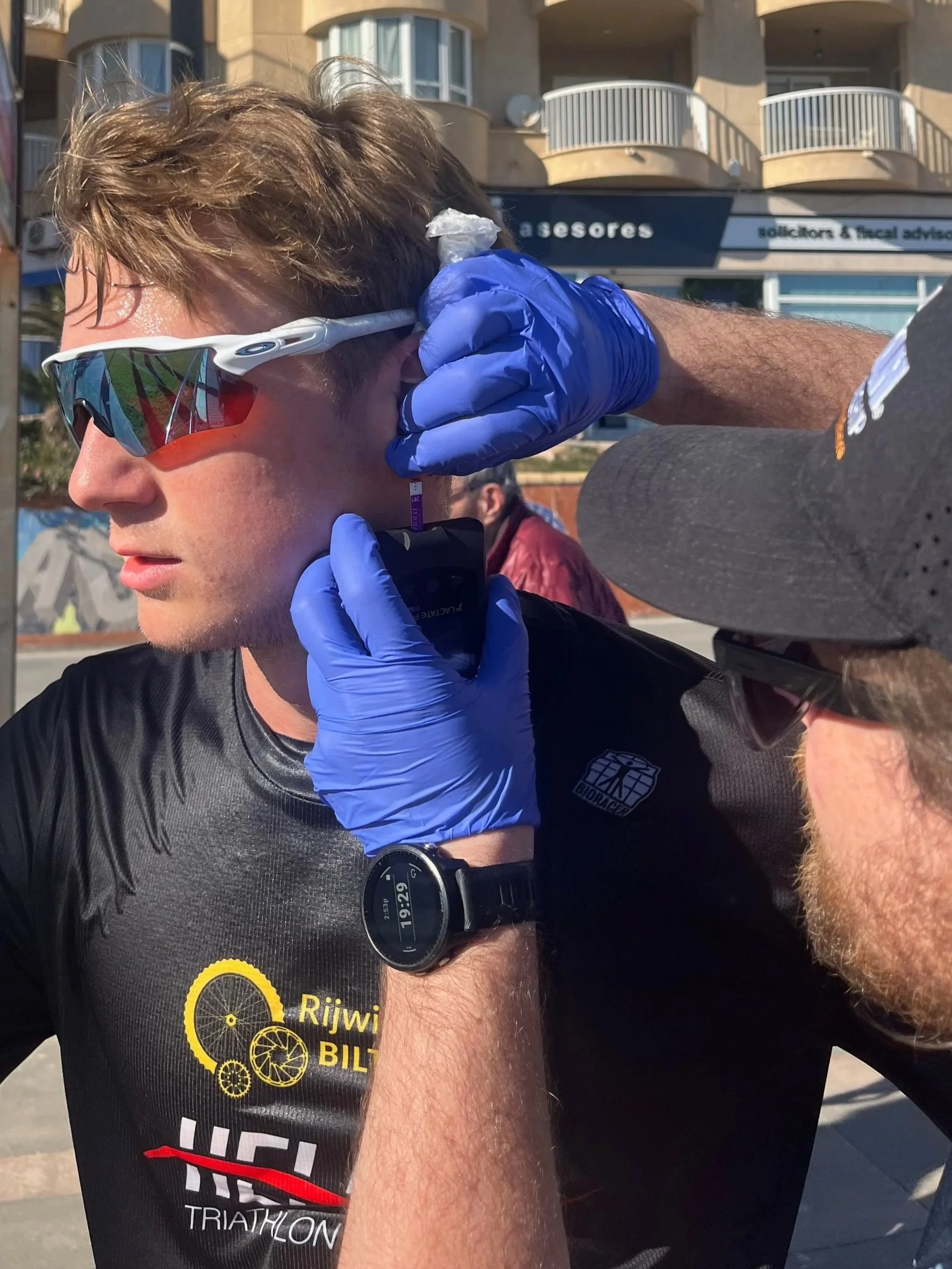
A standard 20-minute FTP test is a performance estimate, not a physiological measurement. It can be influenced by pacing, fatigue, and motivation, often leading to inaccurate training zones. Our INSCYD test uses blood lactate measurements to see what's actually happening inside your body. We measure your unique metabolic profile to give you precise data, not just an estimate.
-
Yes. For athletes who can't travel to our clinic, we offer remote PPD (Power-Performance Decoder) testing. You’ll complete a series of efforts using your own equipment at home or your local gym. We provide clear protocols, and our experts will analyze your data and deliver a detailed report and consult, just like our in-person sessions.