

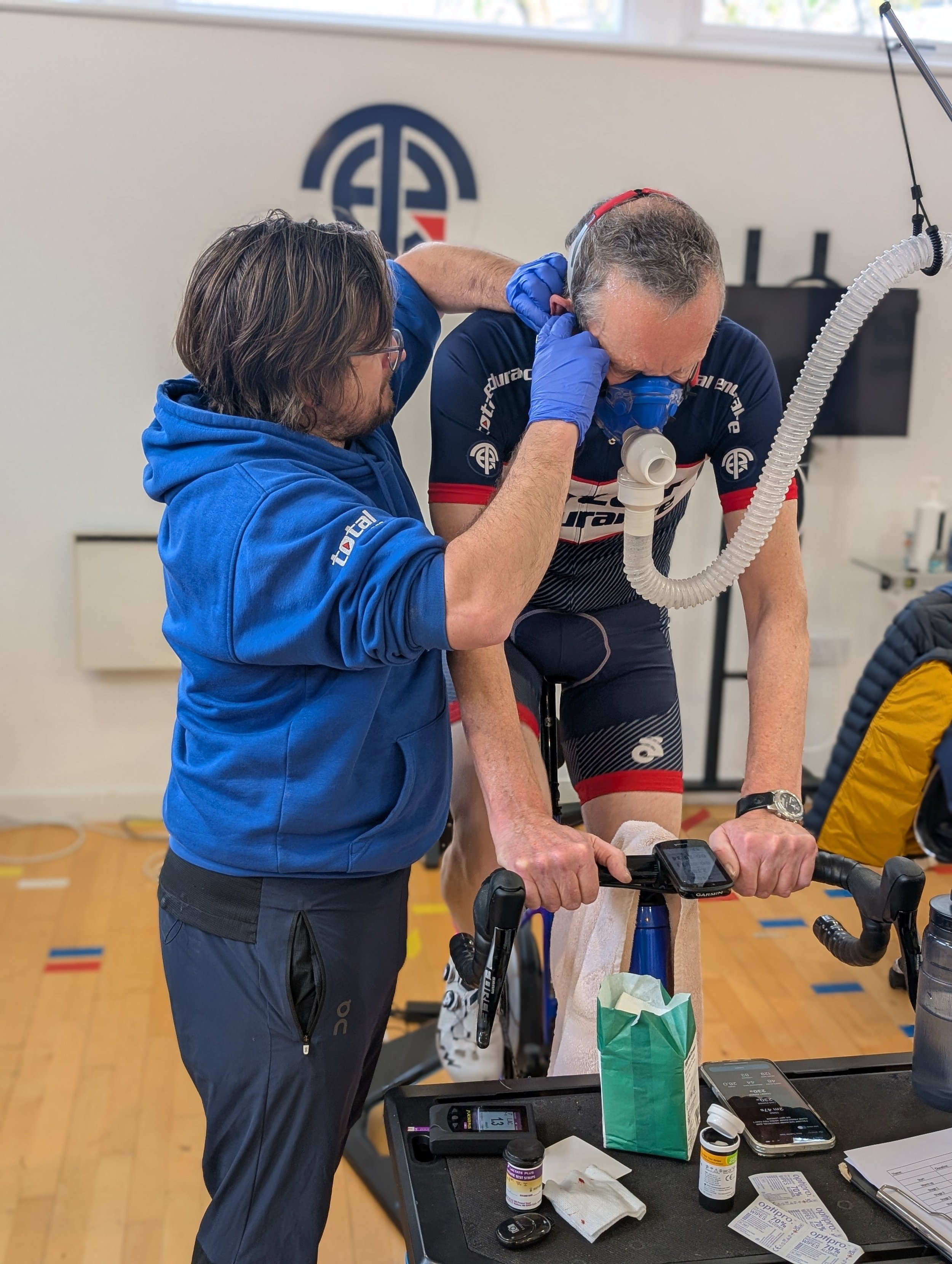
Lactate Threshold Testing — Aberdeen
You've been training for years. You're still stuck at the same race time.
Lactate and metabolic profiling tells you exactly what's limiting you — and precisely what to do about it.
The same metabolic testing methodology used by Tour de France teams, Ironman World Championship athletes, and Olympic endurance coaches.
Why most athletes plateau
Training hard isn't the problem.
Training without data is.
Most endurance athletes are working incredibly hard. Early mornings. Consistent miles. Race after race. And yet performance plateaus. Progress stalls. Race day never quite delivers what training suggested it could.
The reason, in most cases, isn't effort. It's information. Zones built from a 20-minute estimate. Nutrition based on general advice. Race pace estimated — or by what worked for someone else.
Your physiology isn't average. So why is your training based on averages?
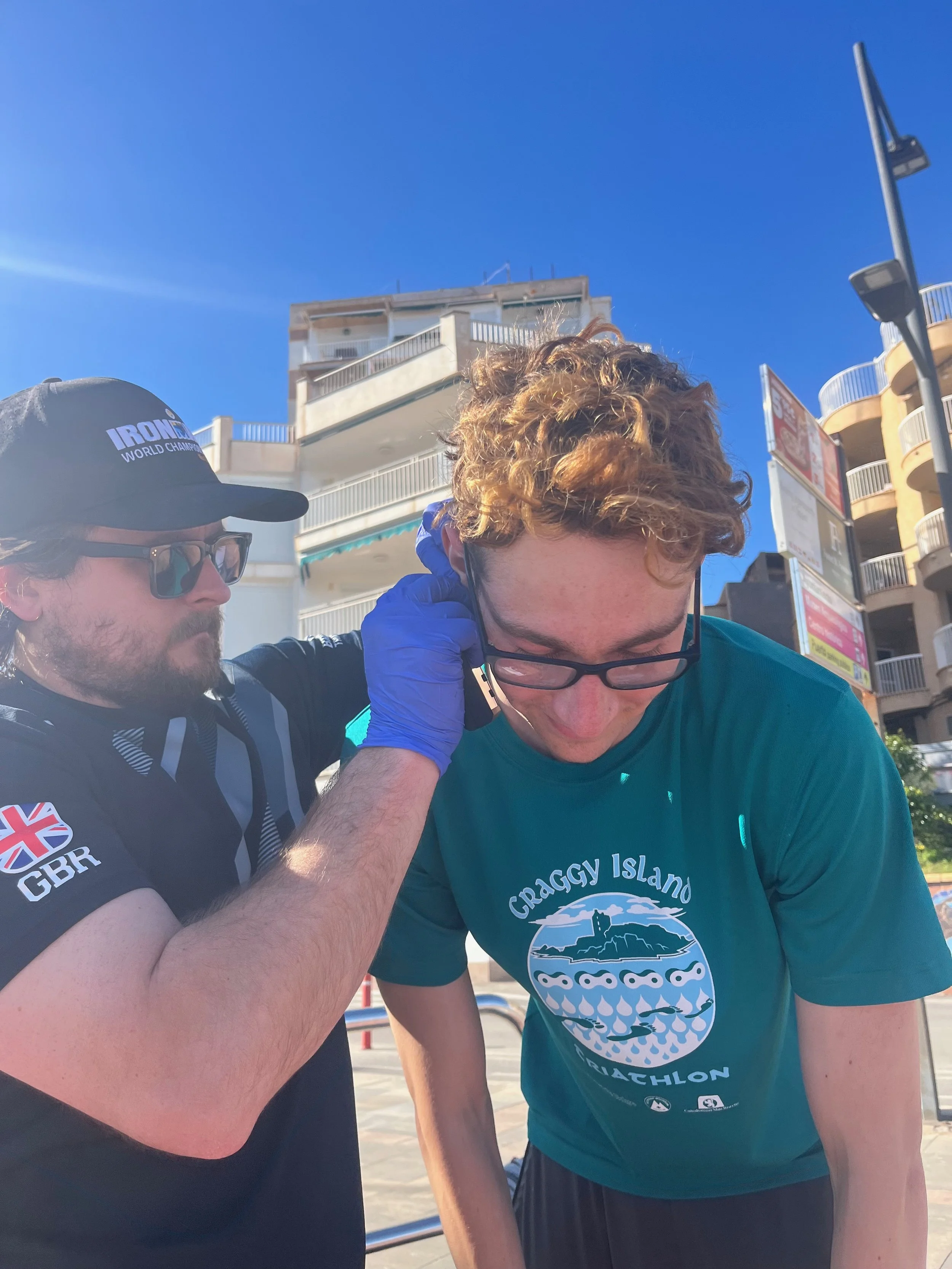
The measurements
Each measurement tells us something different. Together they explain exactly how your body produces and uses energy - and what needs to change to make you faster.
Five values. A Complete picture of your engine
VO2max
Aerobic ceiling
Your maximum rate of oxygen uptake. The ceiling of your aerobic engine — but not the only thing that determines how you race.
A high VO2max with a high VLamax means you're burning through carbohydrates before the finish line. The ceiling matters — but so does everything else.
VLamax — the one most athletes miss
Glycolytic power
How fast your body produces lactate. Too high for endurance events and you burn through carbohydrates long before the finish line.
This is the metric most endurance athletes have never heard of — and the one most likely to explain why their training isn't working.
MLSS
Maximum lactate steady state
The highest intensity you can sustain without lactate accumulating. Your true functional threshold — more accurate than FTP or heart rate zones alone.
Most athletes train at the wrong intensity relative to their MLSS. Knowing it precisely changes every session on your plan.
FatMax
Peak fat oxidation
The intensity at which you burn fat most efficiently. A key marker of metabolic health and endurance capacity, especially over longer distances.
A low FatMax means you're carbohydrate-dependent at race pace — which makes fuelling harder and performance unpredictable.
Oxygen & Lactate Kinetics
How your engine responds and recovers
The speed at which your aerobic system activates, and how quickly your body clears lactate between intense efforts.
Kinetics determine how you perform in real race conditions — not just steady-state tests. They dictate your exact work-to-rest ratios in interval training.
These five numbers don't just describe your fitness — they tell us exactly what type of training will create the most adaptation for you specifically.
Not a generic plan. A prescription built from your physiology.
Ready to see your five numbers?
The most common thing we hear
"I'm not an elite athlete — is this really worth it for me?"
The athletes who benefit most from testing aren't professionals. They're busy age-groupers with 5–10 hours a week to train.
When training time is limited, every session needs to count. The profile tells you exactly where your hours are best spent — and which sessions are currently wasting them.
Instead of copying plans from the internet, you'll know precisely what your body needs to improve.
After your test
What actually changes
You stop doing sessions and hoping they work
Every session in your plan is tied directly to a physiological marker from your profile. You know exactly which value it's targeting and why that matters for your event.
Your training time becomes more productive
Most age-groupers have 8–12 hours a week. Every session that isn't addressing your actual limiters is a session wasted. The profile tells you exactly where those hours are best spent.
You train for your physiology, not someone else's
Generic plans are built for average athletes. Your VO2max, VLamax, and FatMax — and where they sit relative to each other — are unique. The sessions that follow are built around those specific numbers, not a template.
Every session has a purpose you can explain
Not "this is a threshold session." Specifically: this session targets your MLSS because your VLamax is limiting how hard you can sustain at race pace. That clarity changes how you train and how consistently you do it.
Three athletes. Three Completely different prescriptions.
Why your profile matters more than your fitness level.
Three athletes all targeting a 70.3 PB. All training hard. All following plans. Their metabolic profiles reveal three completely different limiters - and three prescriptions that look nothing like each other. None of this would have been identified by a standard fitness test or a power meter alone.
70.3 Profile 01
Good FatMax — but carbohydrate dominant too early at race pace
Trains well. Strong long rides. Falls apart nutritionally in the second half of the bike leg.
What this means at race pace
At 70.3 bike intensity, this athlete crosses into carbohydrate dominance too early. Their mitochondria can't process pyruvate fast enough — so it backs up and converts to lactate, pushing them into carbohydrate dependency before the halfway point. The result: GI distress, energy crashes, and a run leg that falls apart — not from lack of fitness, but from a metabolic bottleneck their training has never specifically targeted.
The key insight — and why most athletes miss it
This athlete has probably been told to do more base training. That's not wrong — but it's not specific enough. Generic aerobic volume improves fitness but doesn't directly drive the mitochondrial adaptation needed to handle more pyruvate at race intensity. The mitochondria need a very specific aerobic stimulus — at the right intensity, for the right duration — to increase their capacity to oxidise pyruvate before it converts to lactate. More kilometres won't do it. The right kilometres will.
Sessions prescribed
Precisely targeted LT1 work designed to stimulate mitochondrial biogenesis and improve pyruvate oxidation capacity — not just aerobic base. Extended efforts at the specific intensity that maximises mitochondrial stress without crossing into carbohydrate dominance. Volume structured around quality of aerobic stimulus, not total hours. Fuelling strategy rebuilt from their actual crossover data — not generic carbohydrate guidelines.
70.3 Profile 02
Compressed diesel — threshold is high but VO2max is now the ceiling
Experienced age-grouper. Excellent endurance. Improvements have stalled despite consistent training.
What this means at race pace
This athlete can sustain a high percentage of their VO2max — but the ceiling itself has become the limiter. Any meaningful increase in 70.3 bike or run pace now requires raising VO2max first. Their low VLamax profile means the conventional approach — short sharp VO2max intervals — won't create the right stimulus for their physiology.
The key insight
More threshold work will not move this athlete forward. They need longer VO2max intervals — 6 to 8 minutes — because their low glycolytic profile means short repetitions don't create sufficient metabolic stress to drive the adaptation needed. This is the opposite of what most training plans would prescribe.
Sessions prescribed
Extended VO2max intervals at carefully calculated intensity — longer duration than standard prescription, structured around their specific kinetics. Threshold work paused until the aerobic ceiling rises. Race pace recalculated once VO2max adaptation is confirmed at follow-up test.
70.3 Profile 03
High VLamax — strong but slow to recover between hard efforts
Good short efforts and surges. Fades badly on the run. Struggles after any climb or change of pace on the bike.
What this means at race pace
Every surge on the bike — a climb, a headwind, an overtake — sends this athlete into lactate accumulation. Their clearance rate is too slow to recover before the next effort arrives. By T2 they're already in deficit. The run becomes damage limitation, not execution of a plan.
The key insight
This athlete doesn't need to get generally fitter. They need to improve lactate kinetics specifically — the speed at which their body clears lactate between surges. The work-to-rest ratio of every interval session must be calculated from their actual clearance rate, not a generic protocol.
Sessions prescribed
High-intensity intervals with recovery periods precisely matched to their lactate clearance data — longer than standard, progressively shortened as kinetics improve. Over-under sessions targeting the lactate shuttle mechanism. Bike pacing strategy rebuilt to minimise surge frequency on race day.
These aren't theoretical scenarios. Every athlete who tests with us receives a prescription this specific.
The question is whether your current training plan is built around your actual 70.3 physiology — or a generic template.
The output
Not just data. A training direction.
The profile is the starting point. What follows is the part that actually changes your training — a clear, physiologically grounded prescription that tells you not just what to do, but why each session is the right one for you right now.
You won't leave with a number and a generic plan. You'll leave knowing exactly which part of your physiology to target, which sessions will do it, and what you should expect to see change.
Your five metabolic values — in plain English
Your VO2max, VLamax, MLSS and FatMax values — and what they mean for your specific event.
Your primary physiological limiter
The one thing that should be addressed first — and why targeting it will create the most adaptation.
Targeted sessions with physiological reasoning
Every session in your prescription comes with the physiological reason it belongs in your plan.
Exact fuelling numbers
Grams of carbohydrate per hour at your specific race intensity — not a generic guideline.
Oxygen and lactate kinetics
How your engine responds under real race conditions — not just steady-state tests.
A benchmark to retest against
So you can see precisely what's changed in 3–6 months — and confirm the prescription is working.
Choose your package
Every package includes your full metabolic profile
Every athlete leaves with their complete metabolic data, a chairside review, and a full written report within 48 hours. What differs is what happens next.
Endurance Performance Project
Test. Train with precision. Retest. See the proof.
What's included
- Full INSCYD metabolic profile
- Post test review immediately after your test
- Full written report within 48 hours
- Optional data consultation once report received
- Purpose-built 12-week training plan
- Every session tied to your specific physiology
- Retest at 12 weeks
- Before and after comparison report
- Coach review — proof of what adapted
How it works
Single sport
Cyclists, runners, or swimmers. One test, one retest.
£420Multisport
Triathletes. Bike and run — both tested and retested.
£580Start here
Metabolic profile + action plan
One test. A purpose-built plan from your data. The right starting point if you're new to structured training or want to act on your results immediately.
£245
Single sport — bike or run
- Full INSCYD metabolic profile
- Chairside review after your test
- Report within 48 hours + data consultation offer
- 12-week training plan — every session explained
- Exact fuelling numbers
- Pacing and nutrition consultation
Already have a coach
Metabolic profile only
The data and the full report. Right if you already have a coach who will act on your results, or if you want the numbers before deciding your next step.
£195
Single sport — bike or run
- Full INSCYD metabolic profile
- Chairside review after your test
- Report within 48 hours + data consultation offer
- VO2 Max, VLamax, MLSS, FatMax
- Oxygen and lactate kinetics
- Exact fuelling numbers
What every athlete receives after testing
Regardless of which package you choose, you never leave with numbers and no context. Every test follows the same delivery process.
Immediately after your session
Post test review with Kevin
Your primary findings explained in plain English before you leave the facility. What the numbers mean for your event, your training, and your next steps.
Within 48 hours
Full written report delivered
Complete interpretation of every metabolic value, your training and fuelling implications, and a benchmark to retest against.
Once you've read it, book a free 30-minute data consultation to talk through anything you're unsure about.Groups and organisations
Squad and club testing
Testing for clubs, universities, and performance squads. Every athlete receives an individual report. Coaches receive a full squad prescription document showing each athlete's limiters, recommended sessions, and training zones side by side.
After your test
What happens next
You never leave with numbers and no context. Every athlete gets a chairside review on the day, a full written report within 48 hours, and the option to book a data consultation once you've had time to read it. For athletes who want to go further, Total Endurance Performance coaching takes your metabolic profile and builds everything around it.
Included — on the day
Post test review with Kevin
Your primary findings explained in plain English before you leave. What the numbers mean, what they say about your event, and what needs to change.
Included — within 48 hours
Full written report delivered
Complete interpretation of every metabolic value with your training and fuelling implications. A benchmark to retest against included in every report.
Optional — free
Data consultation
Once you've read your report, book a free 30-minute call with Kevin to talk through anything you want to explore — your limiter, your training, your race plan.
Optional — ongoing
TEP coaching
1-to-1 coaching built entirely from your metabolic data. Every session, intensity, and recovery period tied to your specific physiology — not a template.
TEP coaching — from £130/month
The biggest gains come from knowing how to use the data
Your metabolic profile tells you exactly what your body does. TEP coaching tells you exactly what to do about it. Every session in your plan is built from your VO2 Max, VLamax, and FatMax — the precise intervals, the right intensities, the recovery periods matched to your lactate kinetics. Athletes who combine testing with coaching consistently see faster, more measurable progress. Because every session is targeting the right thing.
Performance
£130/month
Elite
£180/month
Frequently Asked Questions
-
The Endurance Performance Project combines two INSCYD test sessions with a purpose-built 12-week training plan and a coach review comparing your before and after data. Where a single test tells you where you are, the EPP tells you where you went — and proves the training worked. It's available for single sport athletes at £420 and multisport triathletes at £580.
-
Absolutely not. Beginners and intermediate athletes often see the biggest and fastest improvements because they are moving from pure guesswork to precision data for the first time.
-
After your test, Kevin walks through your primary findings with you before you leave. Your full written report arrives within 48 hours. Once you've had time to read it, you can book a free 30-minute data consultation to talk through anything you want to explore further — your limiter, your race plan, or what a training block built around your numbers would look like. There's no obligation to continue with coaching.
-
A VO2 Max test gives you one number — your maximum oxygen uptake. INSCYD metabolic profiling gives you five: VO2 Max, VLamax, MLSS, FatMax, and oxygen and lactate kinetics. Together they explain not just how big your engine is, but how it produces and uses energy under race conditions. That's the difference between knowing your ceiling and knowing why you're not reaching it."
-
A standard 20-minute FTP test is a performance estimate, not a physiological measurement. It can be influenced by pacing, fatigue, and motivation, often leading to inaccurate training zones. Our INSCYD testing uses blood lactate measurements to see what's actually happening inside your body. We measure your unique metabolic profile to give you precise data, not just an estimate.
-
A single-sport test (Bike or Run) typically takes about 90 minutes from start to finish. This includes setup, the test itself, and a brief cool-down. For the Endurance Performance Project involves two separate test days - one at the start and one at 12 weeks - each around 90 minutes.
-
Yes. For the bike test, you will bring your own bike to be mounted on our Tacx Neo smart trainer. This ensures the data is 100% specific to you and your position. You can also choose to do the test on our Tacx Neo Smart Bike. We provide the treadmill for the run test. Or you can opt to do the testing on a running track if preferred but please contact us in advance.
If you're booking the Endurance Performance Project, your bike setup is recorded at Test 1 so your retest conditions are identical — ensuring the before and after data is comparable
-
The test is designed to push you to your physical limit to get accurate data. It involves short, intense efforts that will feel challenging. While it requires a maximal effort and will be uncomfortable, it is a safe and controlled process. The temporary discomfort is a small price for the valuable performance data you'll gain.
-
It's simple. We require you to arrive rested and properly fueled. You will receive a short, easy-to-follow pre-test protocol upon booking.
-
Yes. For athletes who can't travel to our clinic, we offer remote INSCYD PPD (Power-Performance Decoder) testing. You’ll complete a series of efforts using your own equipment at home or your local gym. We provide clear protocols, and our experts will analyse your data and deliver a detailed report and consult, just like our in-person sessions.
-
Yes. We offer testing for clubs, universities, and performance squads across triathlon, cycling, running, and other endurance sports. Every athlete receives an individual report and coaches receive a full squad prescription document. Get in touch to discuss your squad's needs