

Triathlon Swim
Workshop Aberdeen
Most triathletes lose more time in the swim than they realise — and it's rarely a fitness problem. This half day workshop covers the specific skills that matter on race day: efficient stroke mechanics, open water sighting, and T1 transition. You'll leave knowing exactly what to work on.
What we cover- Front crawl technique and efficiency
- Open water sighting and navigation
- Race pacing and energy management
- T1 transition — how to save time between swim and bike
- Underwater video analysis of your stroke
- Take-home drill plan and session notes
What happens on the day
The workshop is split into four parts. Each one builds on the last — so by the time you're in the water at race pace, you understand exactly what you're doing and why.
Front crawl technique and efficiency
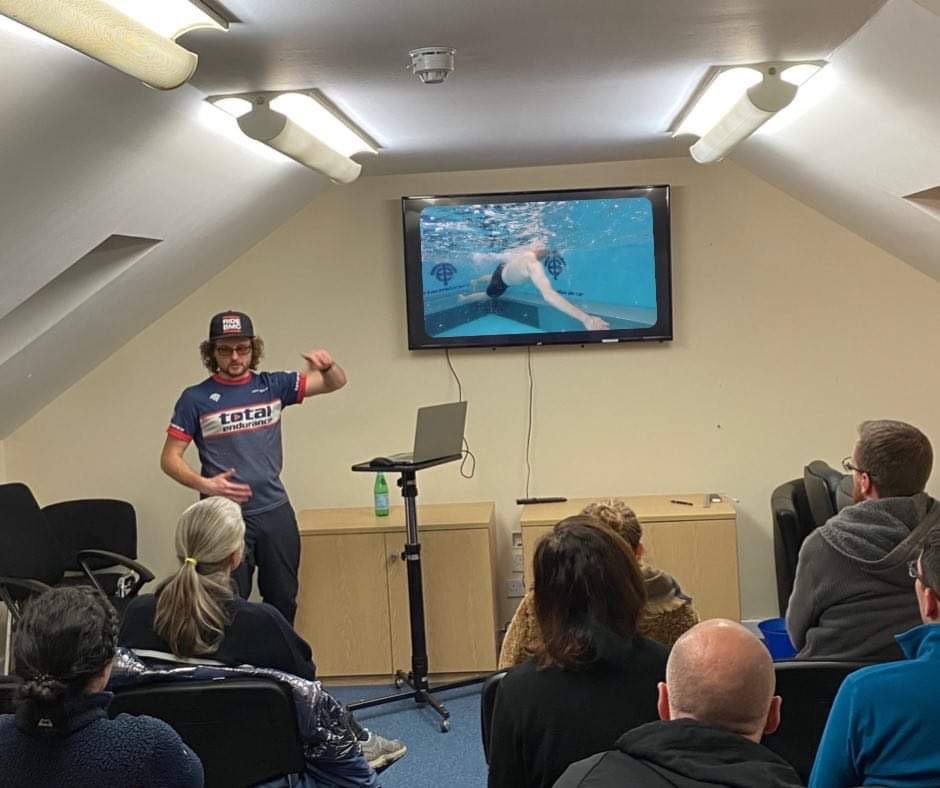
We start with the fundamentals of an efficient front crawl stroke. Using underwater video, you'll see exactly what your stroke is doing — above and below the waterline. Most swimmers are surprised by what they see. We identify the two or three things costing you the most energy and give you specific drills to fix them.
Open water sighting and navigation
Sighting is one of the most energy-costly mistakes triathletes make. Done wrong, it disrupts your stroke rhythm and adds significant distance to your swim. We cover when to sight, how to do it without losing momentum, and how to navigate a buoy course so you're swimming the shortest line — not the longest.
Race pacing and energy management
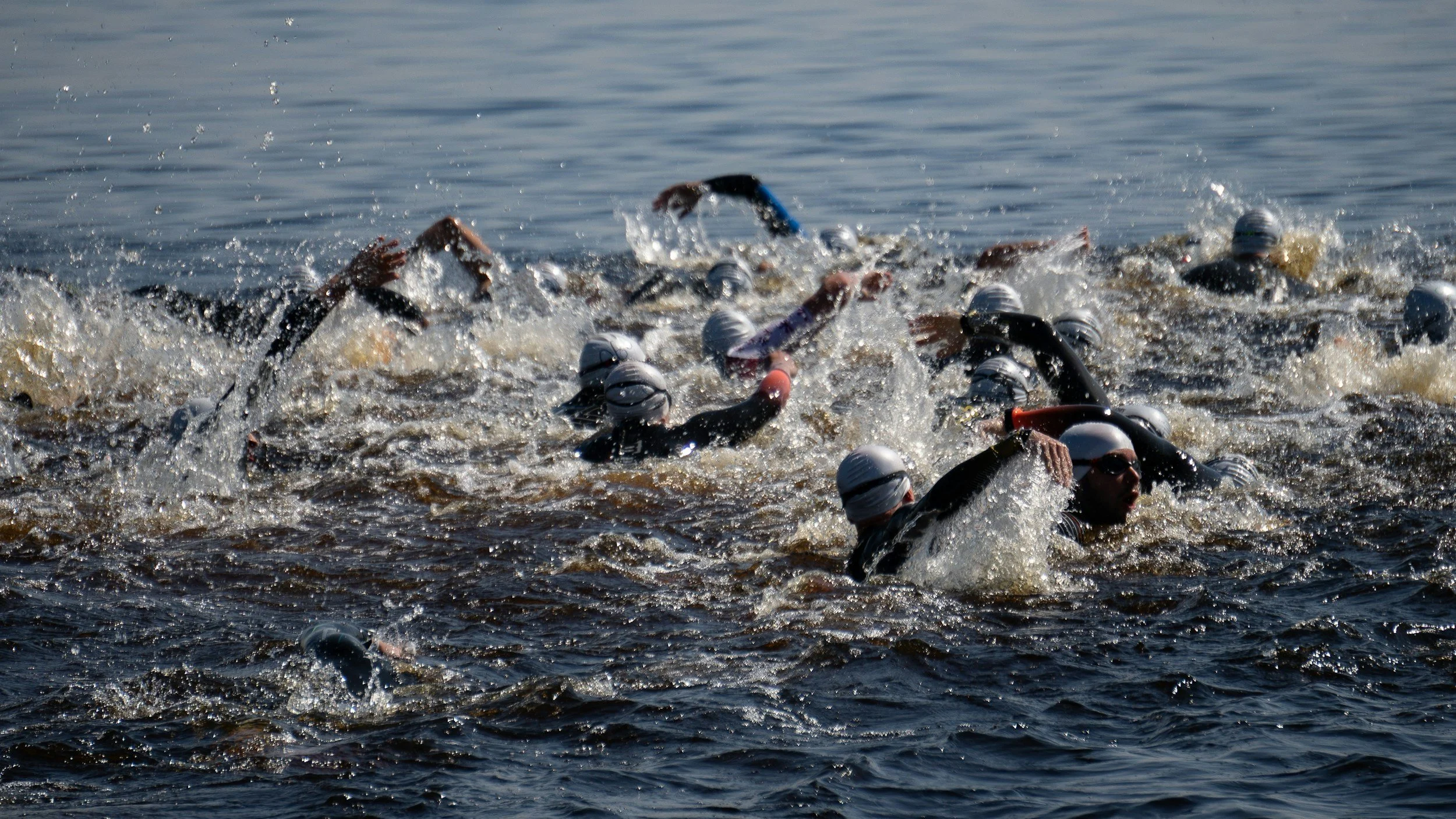
Going out too hard in the swim is one of the most common race mistakes — and one of the most costly. We cover pacing strategy for different race distances, how to manage a mass start, and how to exit the water with enough left for the bike and run. The swim sets up the rest of your race.
T1 transition
Transition is a discipline in itself and most triathletes treat it as an afterthought. We cover wetsuit removal, goggles, cap, and the movement pattern that saves the most time between the swim exit and the bike mount. Small changes here add up to significant time savings across a season of racing.
Is this right for you?
- Signed up for your first triathlon and want to sort the swim before race day
- Done triathlons before but the swim is still the part you dread
- Losing too much energy in the swim and it's affecting your bike and run
- Nervous about open water and want specific strategies to manage it
- Know how to set up T1 properly rather than figuring it out on race day
- Any ability — from first sprint triathlon to Ironman
What's included?
- Half day session in our private pool in Bucksburn, Aberdeen
- Maximum 6 swimmers — individual attention throughout
- Above and below waterline video analysis
- Personalised drill plan to take away
- Session notes and key focus points
- £100 per person
Most triathltes teach themselves to swim
If you've never had your swim stroke analysed, you're probably working harder than you need to. We show you what's actually happening underwater - and give you specific things to fix them.
Underwater video analysis
We film your stroke above and below the waterline. You'll see exactly what your catch looks like, where your body position breaks down, and what's creating drag — in real time, not described after the fact.
Understanding your stroke mechanics
We don't just tell you what to fix — we explain the mechanics behind why it matters. Understanding what efficient propulsion looks like, and why your current stroke is working against it, means you leave with knowledge you can apply independently — not just a list of corrections that mean nothing without context.
Private pool — zero pressure
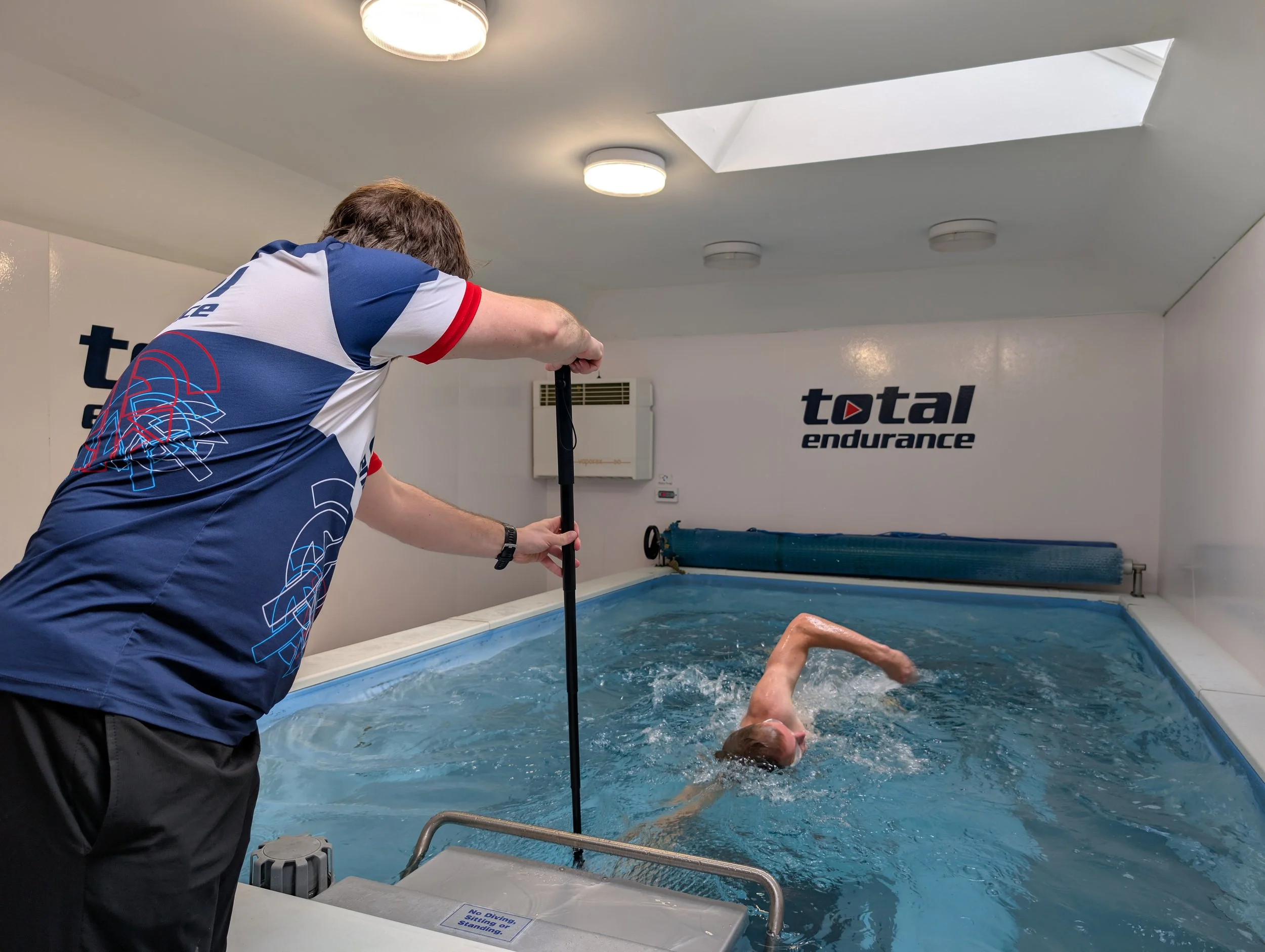
All sessions take place in our private pool in Bucksburn, Aberdeen. No lane traffic, no public, no judgment. You can stop, stand, and ask questions at any point. It's the right environment to actually learn — not just perform.
"Most coaches just tell you what to do. We show you why. Every recommendation we make is backed by what we can see on video and measure in the water — not just what we think your stroke looks like from the side of the pool."
Total Endurance coaching philosophyMaximum 6 swimmers per workshop
We cap every workshop at 6 places. The small group number allow us to give every swimmer individual attention, analyse each stroke properly, and make sure nobody leaves without specific feedback on their swimming.
One coach focused on helping you improve
One highly experienced coach focused on understanding your stroke in detail. They'll highlight what's already working well, identify what's costing you time or energy, and give you clear, specific actions to improve. Not generic advice — feedback built around how you actually swim
What our workshop atendees have said
"Great facilities, easy to find with free parling. Kevin was helpful and friendly. Lots for me to take away and work. thanks.
"A very informative and helpful session. I now have plenty of things to work on to improve my swimming"
"Had a half day swim workshop with them. It was really good and super informative. Tried out the endless pool wioth video anlaysis which was a great tool for assessing your swim technique."
Do I need to be able to swim already?
Yes — this workshop assumes you can swim front crawl to some degree. If you're a complete beginner, our Beginner Swim Workshop is a better starting point.
What level of triathlete is this for?
Any level. We've had people preparing for their first sprint triathlon and athletes who've completed Ironman events. The coaching is tailored to where you are.
Where does the workshop take place?
Our private pool in Bucksburn, Aberdeen.
When is the next workshop?
Register your interest below to join the priority list and you'll be the first to know — with 48 hours priority access before we open to the public.
Can I come with a friend?
Yes — groups of 2 or 3 are welcome. Just mention it when you register your interest and we'll make sure you're on the same date.
What should I bring?
Swimwear, goggles, and a towel. We'll provide everything else including any equipment used during the session.
Ready to improve
your swim?
Join the waiting list and get 48 hours priority access before we open publicly.
- Front crawl technique and efficiency
- Open water sighting and navigation
- Race pacing and energy management
- T1 transition technique
- Underwater video analysis
- Take-home drill plan and session notes
- Maximum 6 swimmers per session