

The Physiology Behind Mark’s Saltire 24 Race
On 20–21 June, Mark Macgillivray lined up at Knockburn Sports Loch for the Saltire 24 — a 24-hour solo ultra run on a hilly, looped course around Knockburn Loch Twenty-four hours later he had covered 167.8km, ascended 2,468 metres, and crossed the line 2nd male out of 49 in the male solo category (4th overall out of 84 solo entrants across both categories).
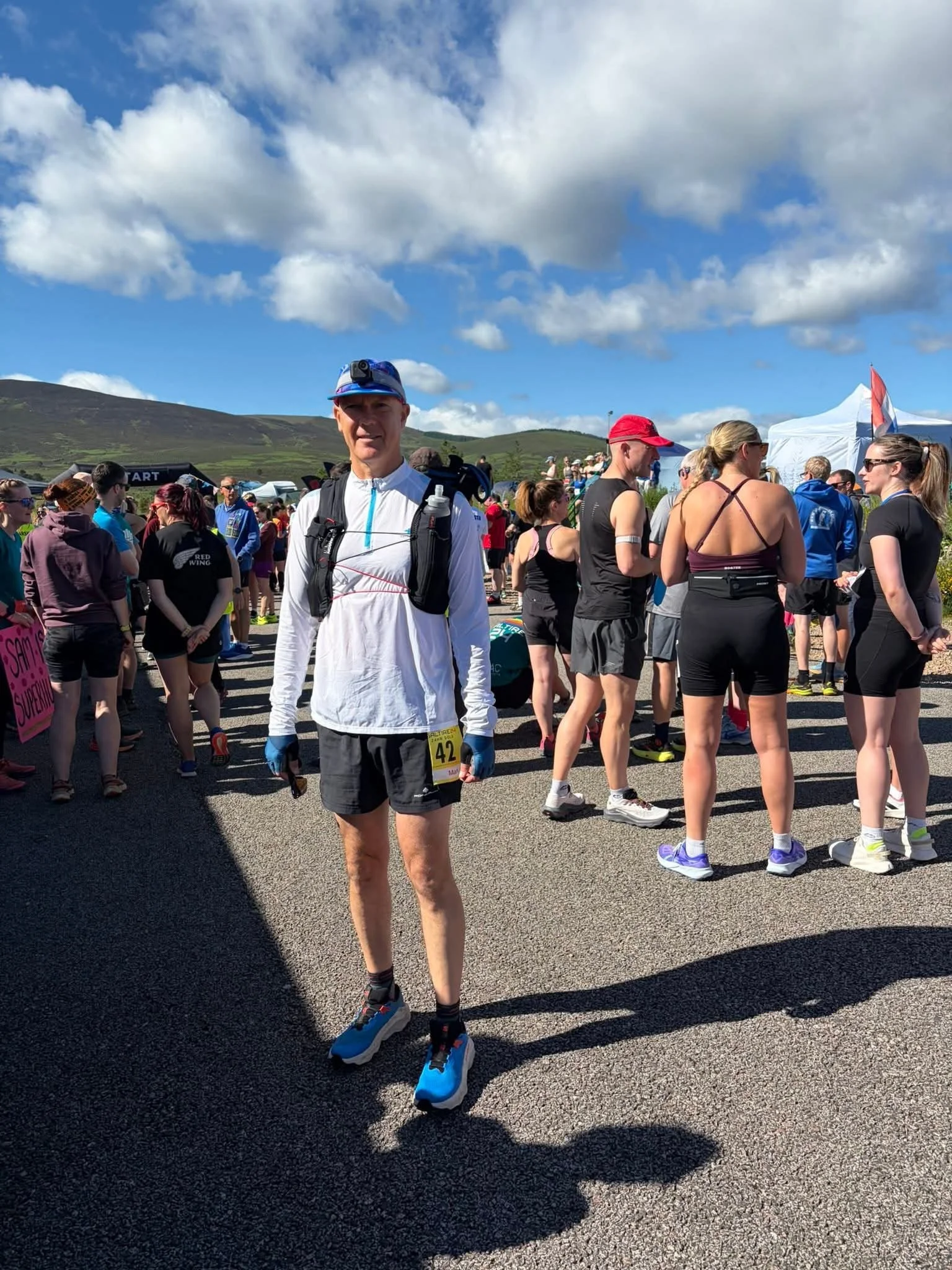
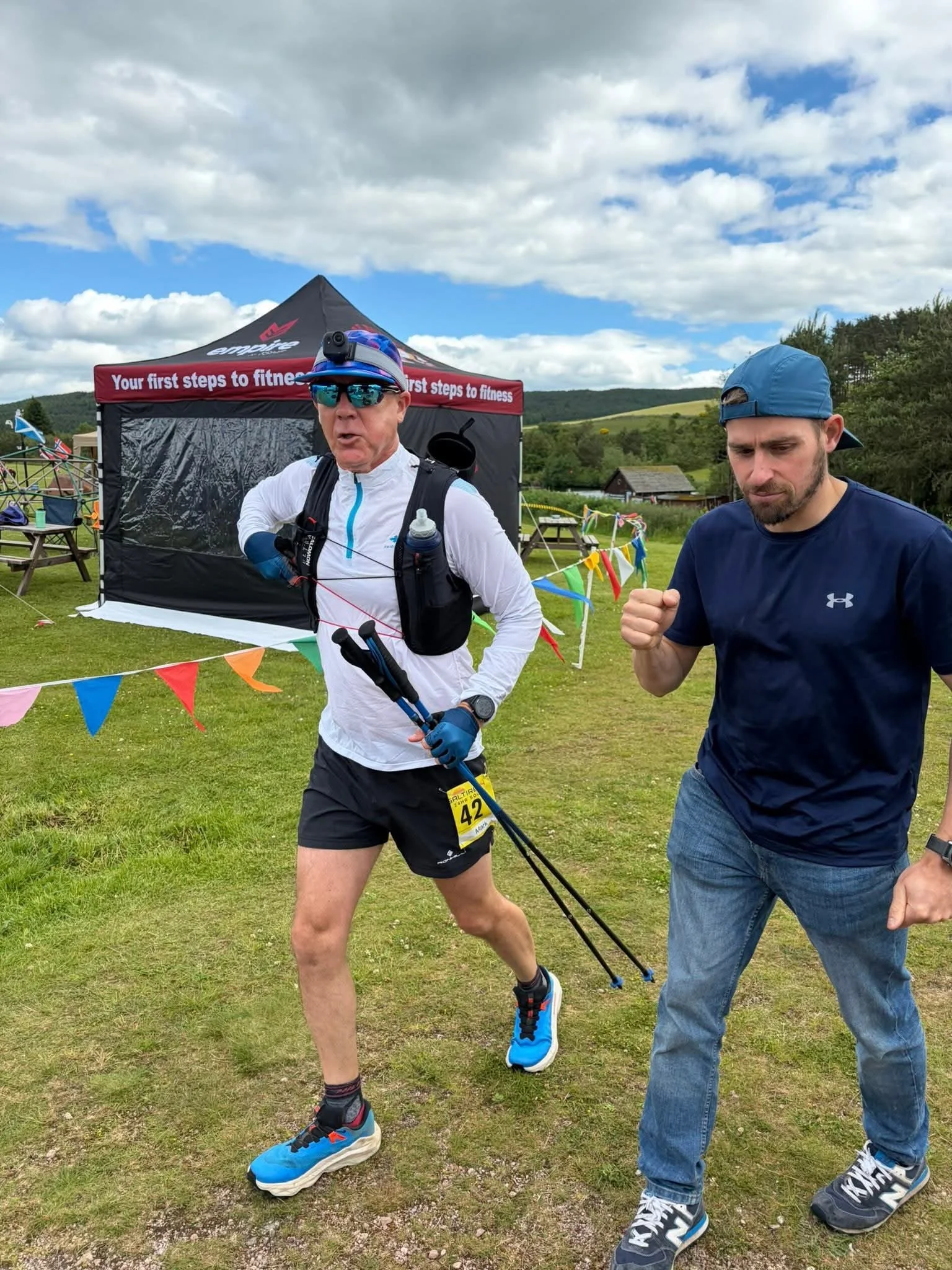
Mark at the start of the Saltire 24 hour event at Knockburn.
For an event that lasts 24 hours, the physiology might not tell you what will happen and its hard to predict what will happen in the back end of a race of that duration, especially when the athlete has never done it before.
This blog is a review of what allows Mark at 59 years old to be able to compete over such a long event. We tested Mark with our full metabolic profile in Feb. His main target was the Devil of the highlands in April. His goal for the Saltire was to try achieve >100 miles (~1 lap per hour)
The aerobic engine
Mark's lactate test in February measured a VO2max of 56.14 ml/min/kg - a strong level for a recreational male runner, and a very strong one at 59. While VO2 max is important it doesn’t give a true reflection on what he might be capable of on race day. The other side of the energy equation is how strong is his glycolytic system (VLamax). VLamax, a measure of how quickly his muscles produce lactate, at 0.29 mmol/l/s. That's low, and for a distance athlete, low is exactly what you want.
A low VLamax means the glycolytic system - the fast, carbohydrate dependant energy pathway stays relatively low. Energy production leans heavily on the aerobic system instead, which is slower to fatigue and, critically, can run almost indefinitely as long as fuel and oxygen keep arriving. Mark's test showed his aerobic contribution stayed above 84% of total energy production right up to the point where he was running at 89% of his VO2max. These all point towards an athlete with a strong aerobic profile.
Racing inside the aerobic zone for 24 hours straight
The clearest evidence that this profile translated into race execution comes from his Garmin data. Across the full 24 hours, Mark's average heart rate was 113bpm against a tested maximum of 169bpm recorded during his lactate test in February. That's roughly 67% of max heart rate sustained for a full day and night of continuous movement.
Starting steady and Marks patience in the early laps when every one feels good allowed him to stay consistent. The lap splits back this up. His 24 full laps ranged from 48:28 at the fast end to 1:06:20 at the slowest. The longer laps were where he stopped to change his shoes and socks every 6 hours. There's no lap in his race data that looks like a blow-up. That's pacing discipline built on knowing, from testing, exactly what intensity he could sustain and then having the patience and discipline to execute it.
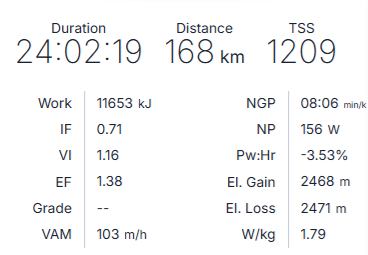
Marks Training Peaks data
A slightly negative aerobic decoupling shows that he wasn’t blowing up in the back end of the race and inline with his comments and lap splits he was actually running stronger over the final part of the race.
Fat as fuel: the metric that matters most over 24 hours
If VO2max and VLamax explain why Mark could hold a sustainable pace, his fat oxidation capacity explains why he could keep doing it for 24 hours without running out of fuel.
His FatMax — the point of peak fat oxidation — was measured at 567 kcal/h, well above average for a male runner. That figure matters enormously in an event of this length. Glycogen stores are finite; even a well-fuelled athlete carries roughly 400–500g of usable glycogen, worth somewhere in the region of 1,600–2,000 kcal. Over 24 hours, Mark's body burned an estimated 11,898 kcal. There is no realistic amount of race-day carbohydrate intake that closes a gap of that size - the majority of that energy has to come from fat.
An athlete with a high VLamax and a low FatMax burns through glycogen quickly and hits a wall when it runs out, regardless of how much they try to eat on the move. Mark's metabolic profile — low VLamax, high FatMax — means his body was doing the opposite:- using predominantly fat for the bulk of the race and using carbohydrate to supplement it, rather than the other way around.
This is a trainable characteristic, not just a genetic gift. Consistent low-intensity aerobic training — the kind that stays at or below FatMax pace — is what builds and protects this capacity over time. It's also the reason his training zones were built around protecting his easy running pace (6:00/km or slower) rather than letting easy days drift faster - which is common when athletes have a strong VO2 max, the faster pace feels easy, but its too hard metabolically and it adds fatigue for less aerobic adaptations.
Fuelling with the same discipline as the training
Good fitness and a perfect fuelling plan doesn’t count for much without consistent execution on the day. Mark kept a handwritten fuelling log throughout the race — lap number, time, exactly what he ate and drank, and a note on how he felt. It's not a polished spreadsheet. It's a scrap of paper filled in on the move, and it's a far more honest picture of what a 24-hour race actually involves than any pacing chart.
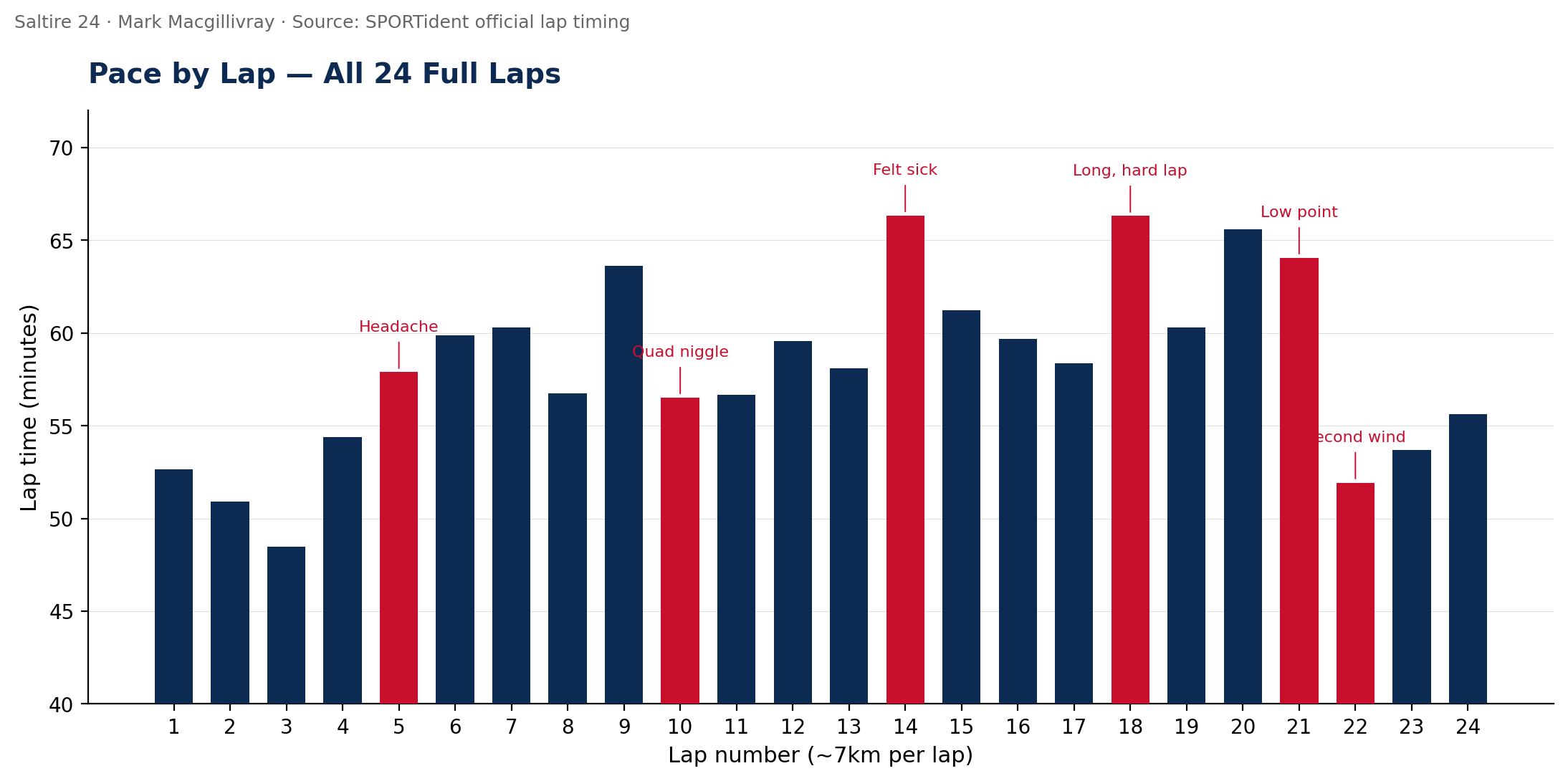
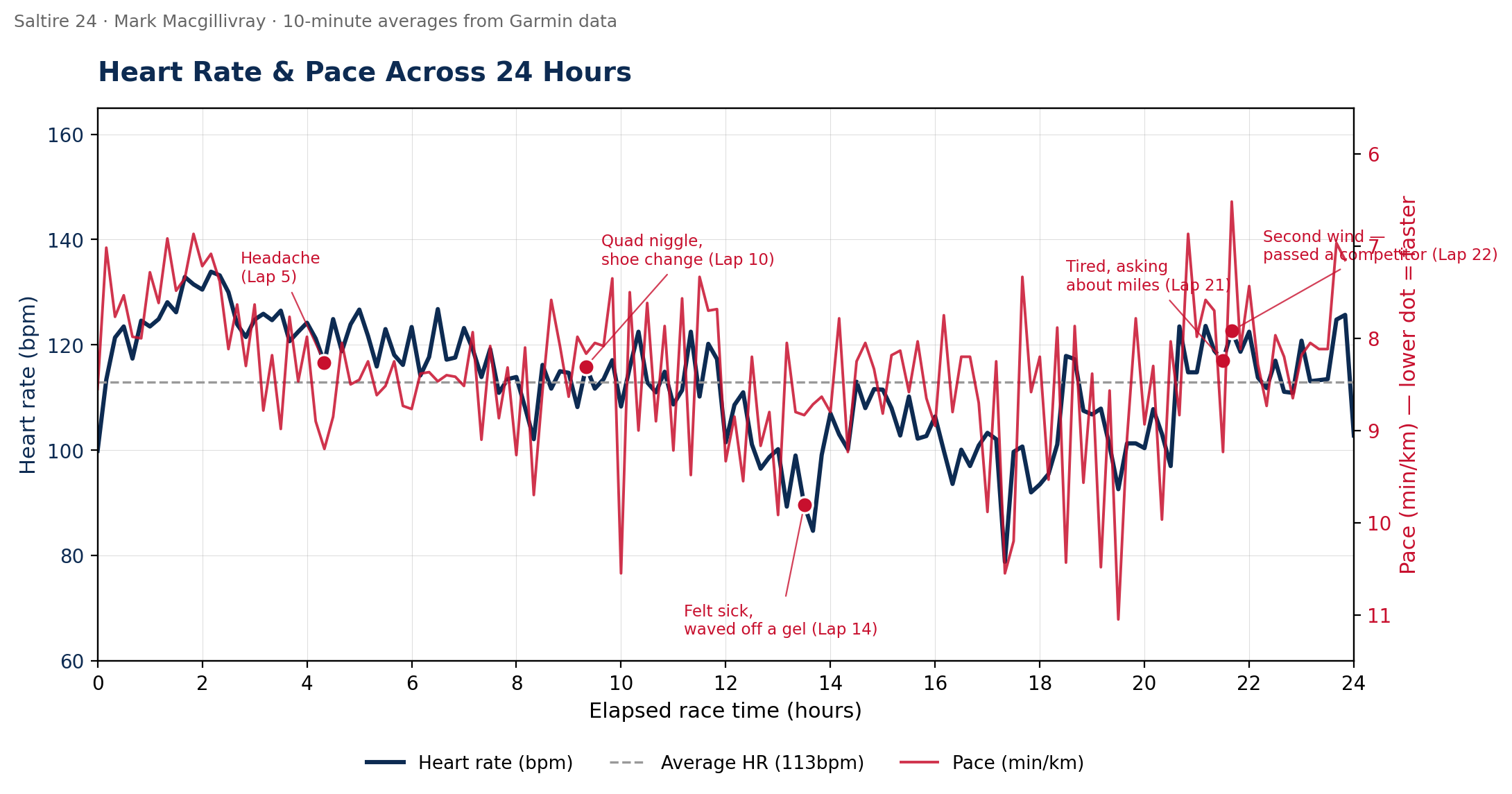
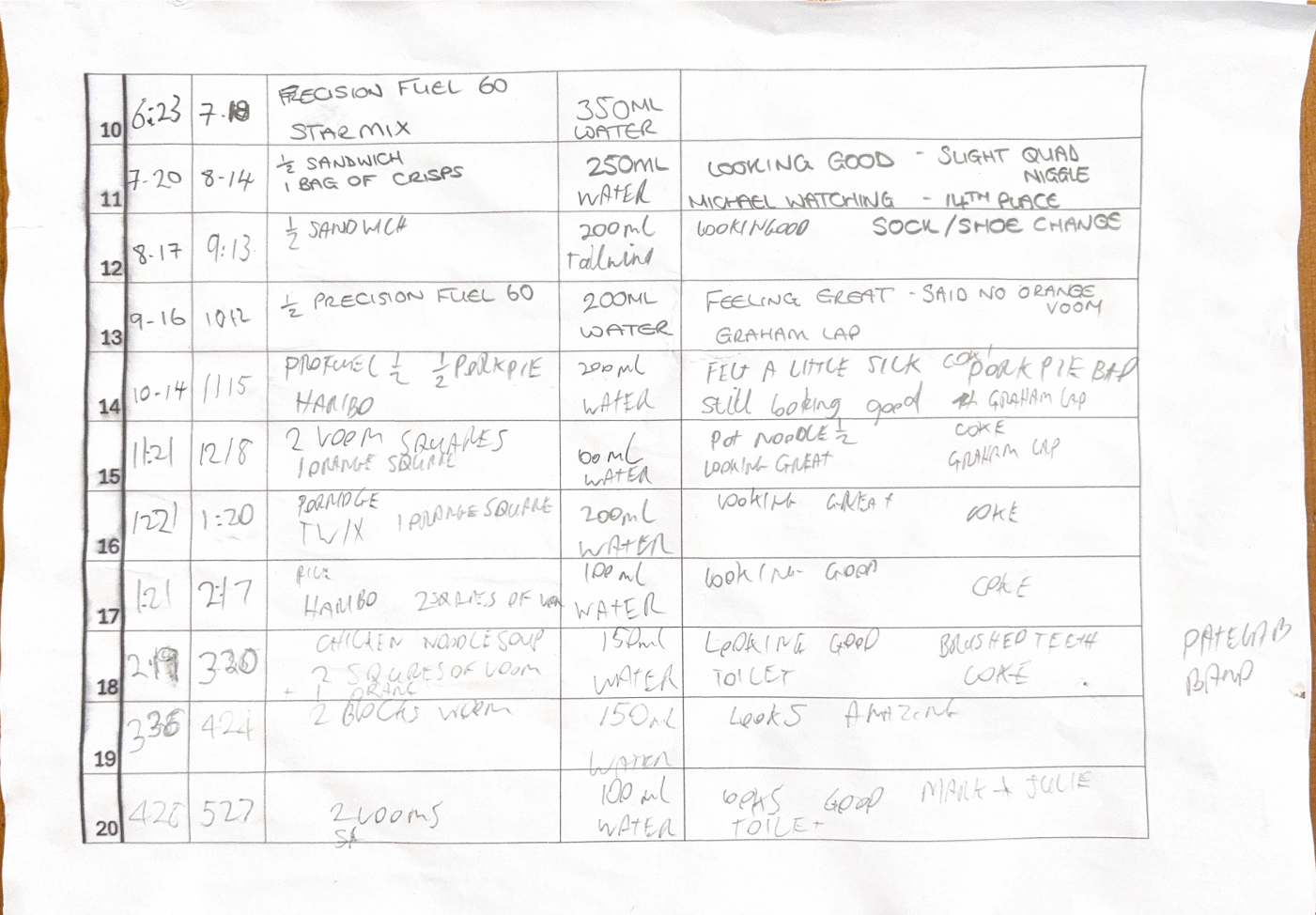
Mark and his Teams fuelling notes - very simple but highly effective and allows good review of the what happened during the race.
The early laps read like a plan going right: a sandwich and twix (the holy grail on race day according to Mark) at lap 3, Precision Fuel chews and Tailwind rotated with water, all logged as "great." By lap 5 the first note of trouble appears - a mention of a headache, alongside a watermelon slice and more Tailwind. He kept moving, kept drinking, and the next few laps read "good" again.
The middle of the night is where it gets harder, and the log doesn't hide that. Around lap 10 there's a quad niggle and a sock and shoe change. By lap 14, running past his support crew, he felt "a little sick" and turned down an orange Voom bar — but he didn't stop eating altogether, switching instead to things that were easier to stomach: chicken noodle soup, a pot noodle, porridge. By lap 21, the note is simply "tired — asking about miles/timer." That's the low point in the log, the closest thing to a wobble across 24 hours.
What happened next is the part worth paying attention to. Lap 22: "looking better, 2nd wind" — and he used it to pass a competitor. Lap 23: "looking hot but on a mission." He kept fuelling through all of it — coke, Tailwind, water, whatever would go down — right through to the laps where the log stops recording food and just tracks the clock, because by then it was about closing out the distance.
A typical endurance event story - a strong start, a dip in the small hours, a recovery, a hard finish. this is what real ultra fuelling looks like. It's not a straight line, and the value of a rehearsed fuelling strategy isn't that it prevents the low patch. It's that it gives you enough in the tank to fuel your way back out of one. A genuine glycogen crash in a 24-hour race is very hard to recover from.
Athletes with a stronger glycolytic profile — meaning they're more carbohydrate-dependent — often pay for it later in an event this long, in the form of niggles and rising muscle fatigue. As Type I fibres, the fatigue-resistant aerobic fibres, start to run low on glycogen, the body compensates by recruiting more of the dormant Type II fibres. Normally those only switch on above roughly 70% of VO2max but glycogen depletion in Type I fibres can trigger that recruitment even at much lower intensities. The catch is that Type II fibres are less efficient and far less fatigue-resistant, and this shift is part of what drives aerobic decoupling: heart rate creeping up, or pace dropping, for the same effort as the race wears on. As glycogen stores run low deep into a race like this, muscles can struggle to contract with their normal force and control. This can sometimes be the cause of niggles, cramps, and sometimes strains that can occur in the closing stages of an ultra.
A Walk a day can help you run for a day
Mark out for a walk with his Springer Spaniel - Colin
Colin, having also won the race is a pretty solid man to have in your support team, not to mention he’ll happily run laps with you through the night.
One detail worth highlighting: Mark walks every day and even on days where he has higher training volume. These walks are usually with his dog and not structured training. For an athlete targeting an event built entirely around time on feet, that habit matters more than it might seem. Aerobic adaptation and the muscular-skeletal resilience needed to keep moving for 24 hours don't come exclusively from hard sessions; they accumulate from total volume of low-intensity movement over weeks and months. A daily walk adds meaningfully to that volume without adding fatigue that competes with structured training. It's a quiet, unglamorous habit, and it was part of what got him to the start line able to handle 24 hours on his feet.
What this means beyond one race
Mark's result is a useful case study precisely because none of it relies on exceptional natural speed. His threshold 10K equivalent — around 42:30 is strong but not extraordinary. What made the Saltire 24 result possible was the combination of a well-developed aerobic system, a metabolic profile suited to long duration effort, disciplined pacing built from knowing his numbers, and fuelling practised until it was second nature.
That combination isn't age-limited. If anything, it's the layer of endurance sport where age matters least, his VO2max may decline gradually over the decades, but aerobic efficiency, fat-burning capacity and pacing judgement are built and maintained through consistent training, and they respond to it at 59 much as they do at 29.
Physiological testing doesn't just describe an athlete's current fitness — it identifies which levers are worth pulling and which training sessions actually move the needle for their specific event. For an athlete like Mark, that meant protecting easy running pace, prioritising aerobic development over speed work, and building a fuelling strategy around his actual carbohydrate and fat oxidation numbers rather than generic race-day advice. Four months later, the data and the result lined up.
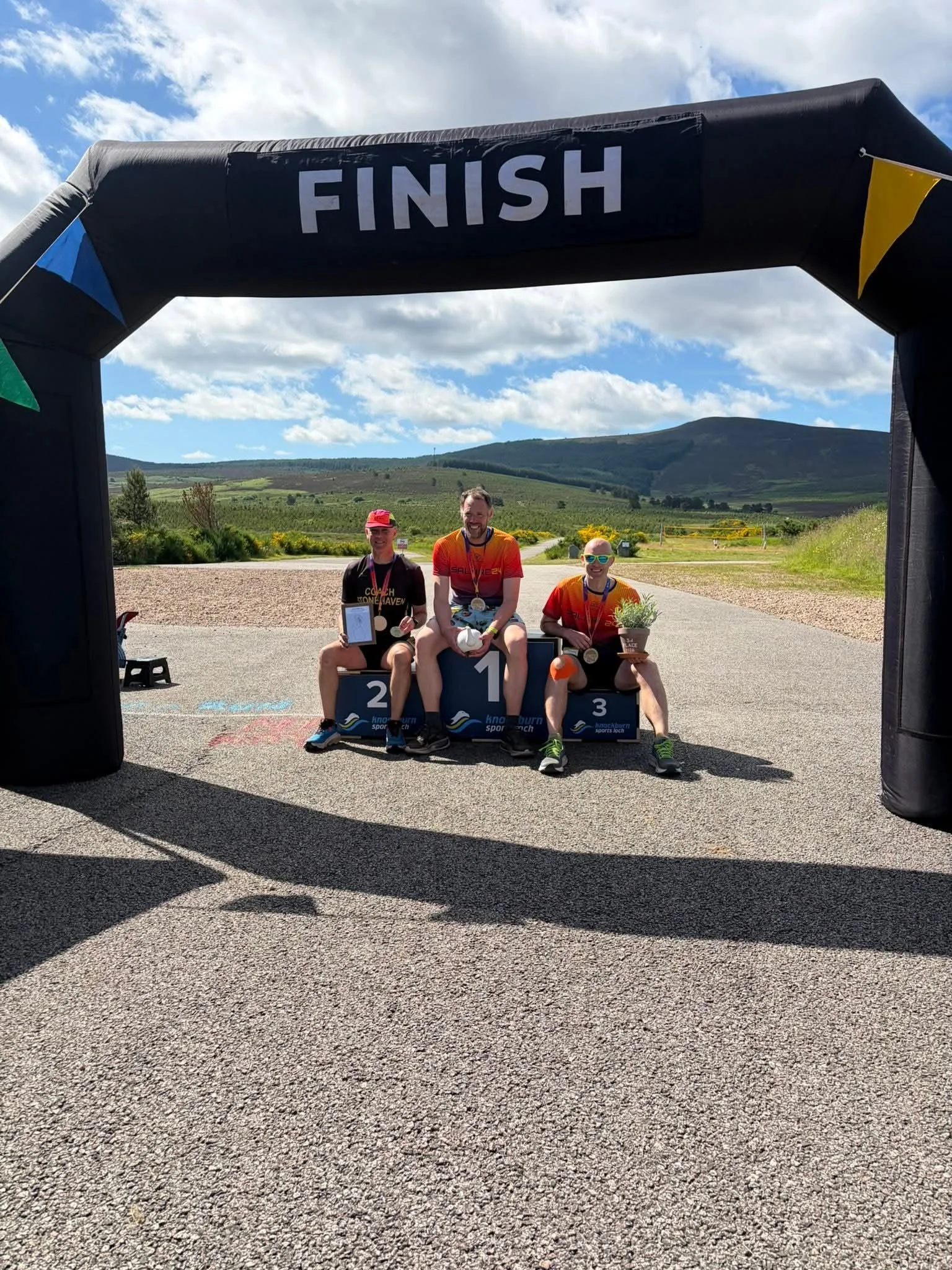
Mark having a well deserved seat post 24 hours of running.
Now the prep focuses on the Ben Nevis hill race and hoping to get a start for the West Highland Way race next year which needs even greater amounts of strength and endurance.