

Hit your target time at your 70.3.
Without guessing, and without getting injured. We test you, then tell you exactly how hard to train, how many grams of carbohydrate to take on per hour, and what will make you faster between now and race day.
70.3 Training and Race Assessment. Bike, run, or both in one session, on your own bike. Tested in our Aberdeen lab, or we come to you anywhere in Scotland, at your club, track or out on the road.
The most common 70.3 mistakes
Most 70.3s aren't lost in the swim. They're lost on the bike, and you only find out on the run.
Too hard on the bike
You feel strong at 40km and hold a few watts too many. By 10km into the run, it's a shuffle.
A race power range built on your physiology, not a generic percentage of threshold, so you know exactly how hard you can ride. On a hilly course, you also get targets to sit above and below on the climbs and flats.
You've committed to this race
You've entered, you've blocked out the months, and you'll spend early mornings and long weekends getting ready. What decides whether that work pays off is whether your training is aimed at your physiology. A generic plan gives every athlete the same sessions. Our testing answers the three questions that matter.
What pace and power can I hold?
A race power range and a realistic run pace off the bike, built from your physiology rather than a formula.
How much should I eat?
Your fat and carbohydrate use at every intensity, so your half ironman fuelling is built on your numbers, for race day and every long session.
What should I train?
What's limiting you and what to work on, so every session of your 70.3 training has a purpose that moves you towards race day.
How your results make you faster
Your test shows what's holding you back. Your training changes to fix it.
What your test measures
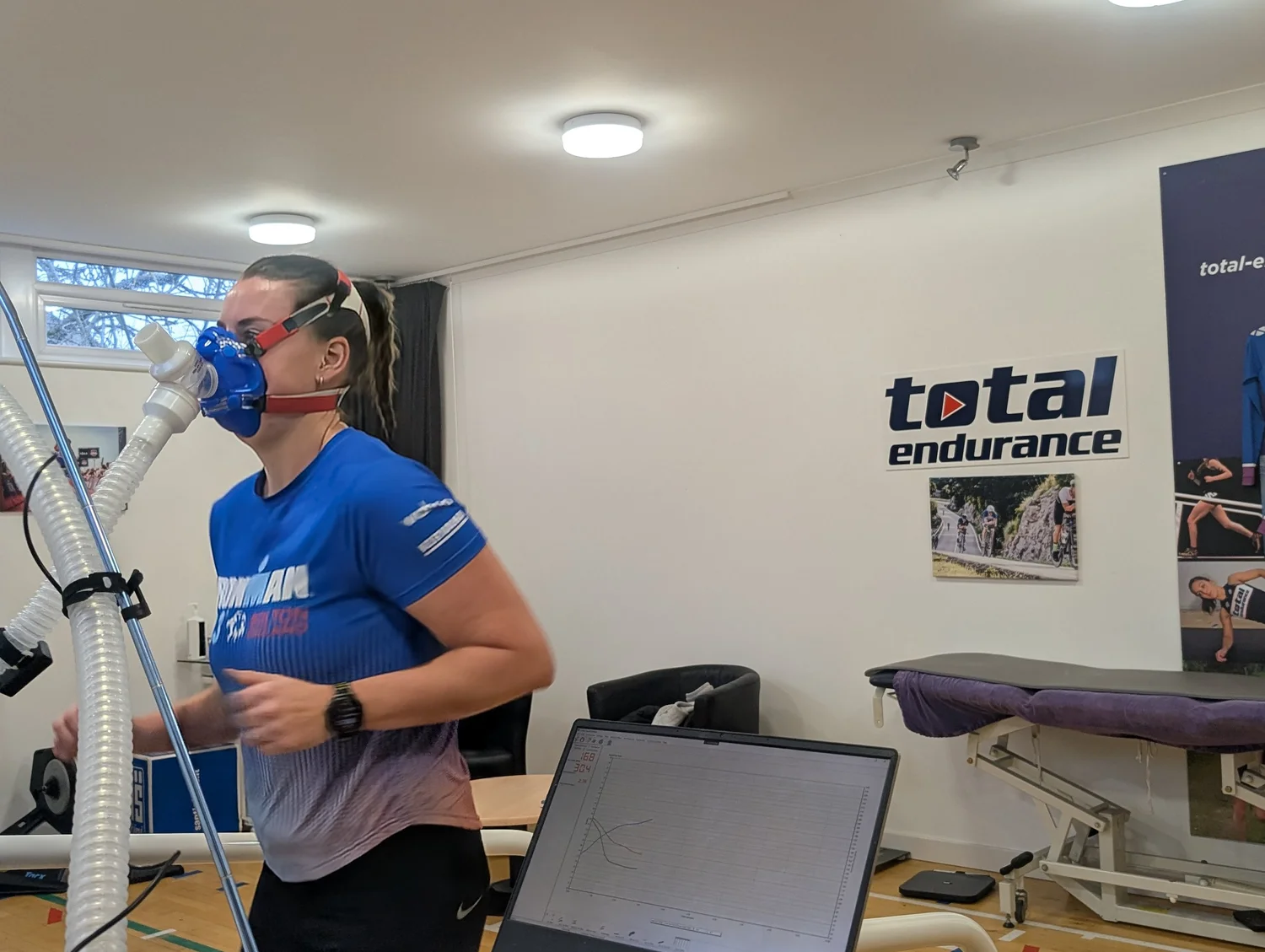
One session in our lab, on your own bike and our treadmill. Every number comes with an explanation and a plan.
Threshold
The power and pace you can sustain, and where your race targets need to sit to leave something for the run.
VO2 max
The size of your aerobic engine, which sets the ceiling on what's possible for you.
Glycolytic power
How quickly your body produces energy from carbohydrate. Too high, and you burn through your fuel before the run.
Fat and carbohydrate at every intensity
How much fuel you burn from easy Zone 2 to hard intervals, so every session and your race has a fuelling target.
- Target bike power
- 190–200W
- Target run pace off the bike
- 5:05–5:15/km
- Bike threshold
- 235W
- VO2 max
- 54ml/kg/min
- Carbohydrate on the bike
- 85g/hour
- Carbohydrate on the run
- 65g/hour
- Fuel for a Zone 2 ride
- 35g/hour
- Running economy (add-on)
- 215ml/kg/km
Your 70.3 Training and Race Assessment
Test the bike, the run, or both in one session. Results within 48 hours, explained by a coach.
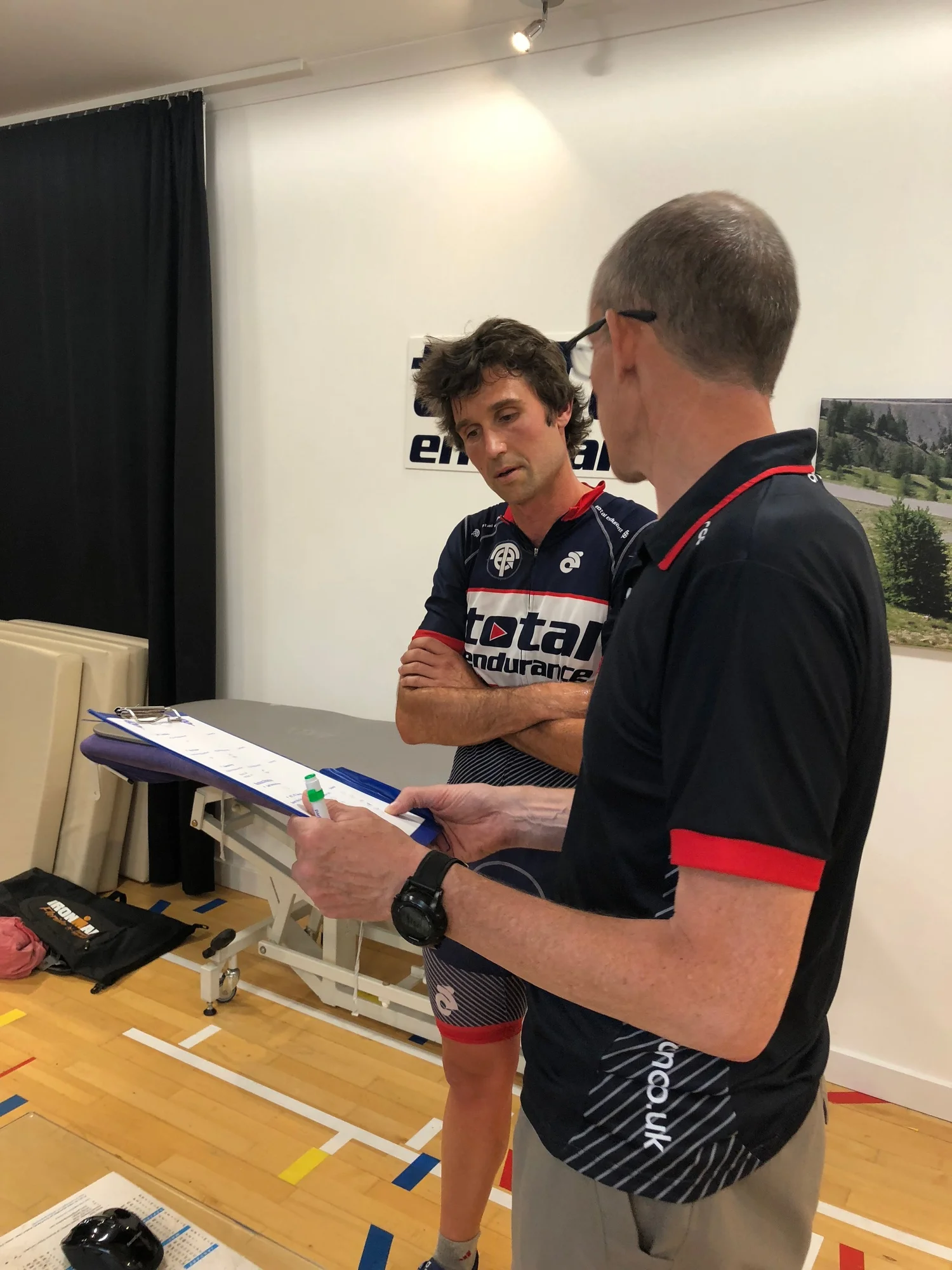 Every result explained by a coach
What you get
- Your target pacingA race power range and a realistic run pace off the bike, with targets for the climbs and flats on a hilly course
- How to trainWhat's limiting you and what to work on, so every session has a purpose
- How much to fuelFat and carbohydrate use at every intensity, for race day and every session, plus how much to refuel afterwards
- Your training zonesTaken from your test, not from a formula
- Results in 48 hoursYour full results, explained by a coach
- Tested on your own bikeOn our smart trainer, so your numbers match the bike you race on
Add running economy
Your test measures the size of your engine. Economy measures how efficiently you use it at race pace, off the bike. Add it to the Run assessment. Included with Bike and Run.
Add swim video or propulsion analysis
Complete the picture across all three disciplines. Adds about an hour to your session.
Add a 16-week 70.3 plan
Built entirely from your results. Swim, bike and run sessions, a fuelling target for each, and your taper mapped to race day.
Follow-up tests: £120 for a single discipline, £230 for bike and run.
After your test
Your results are only useful if your training changes because of them. Choose how you want to use them.
Train with your zones
You leave with your training zones and a fuelling target for every intensity. Right for you if you follow your own programme and want it built on real numbers.
Follow a half ironman training plan
Add a 16-week 70.3 training plan built from your results, so every session targets what's limiting you.
Train with a coach
We build your data into a plan that's yours alone, then adapt it week by week as you improve. Talk to a coach
Half price on your first month of coaching. Start coaching with us within 14 days of your assessment and your first month is 50% off.
Talk to a coach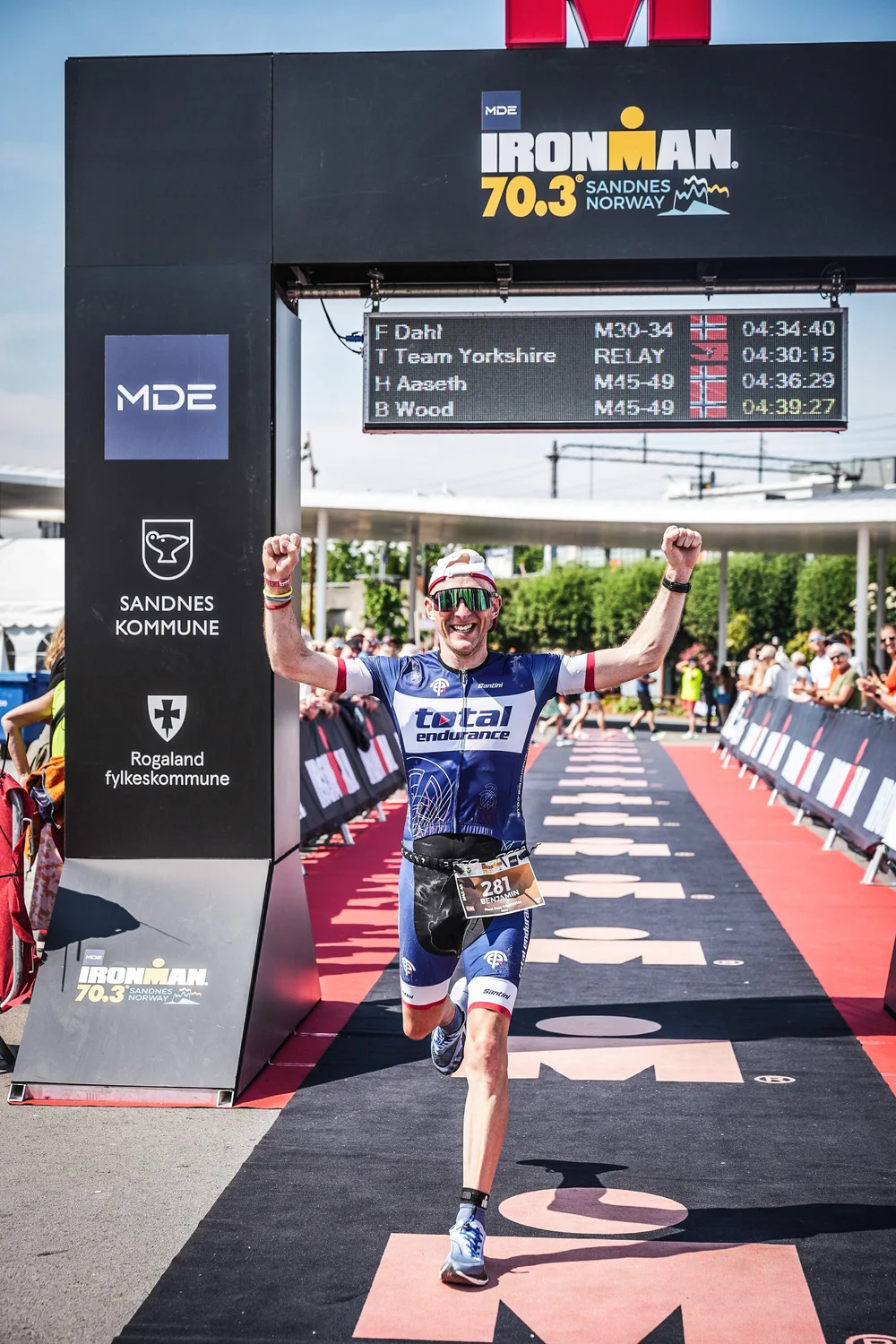
"My test showed my glycolytic power on the bike was too high for my target race. We did specific sessions to bring it down before race day, and it made a big difference to how much carbohydrate I was burning. I got my fuelling right, executed my race plan and set a PB of under 4:40."
Ben Wood, IRONMAN 70.3 Sandnes 2023, M45–49
In our lab or out on the road
Most athletes test in our Aberdeen lab on their own bike on a smart trainer, plus our treadmill. In winter that's where you'll do most of your training anyway. You get the same results whichever you choose.
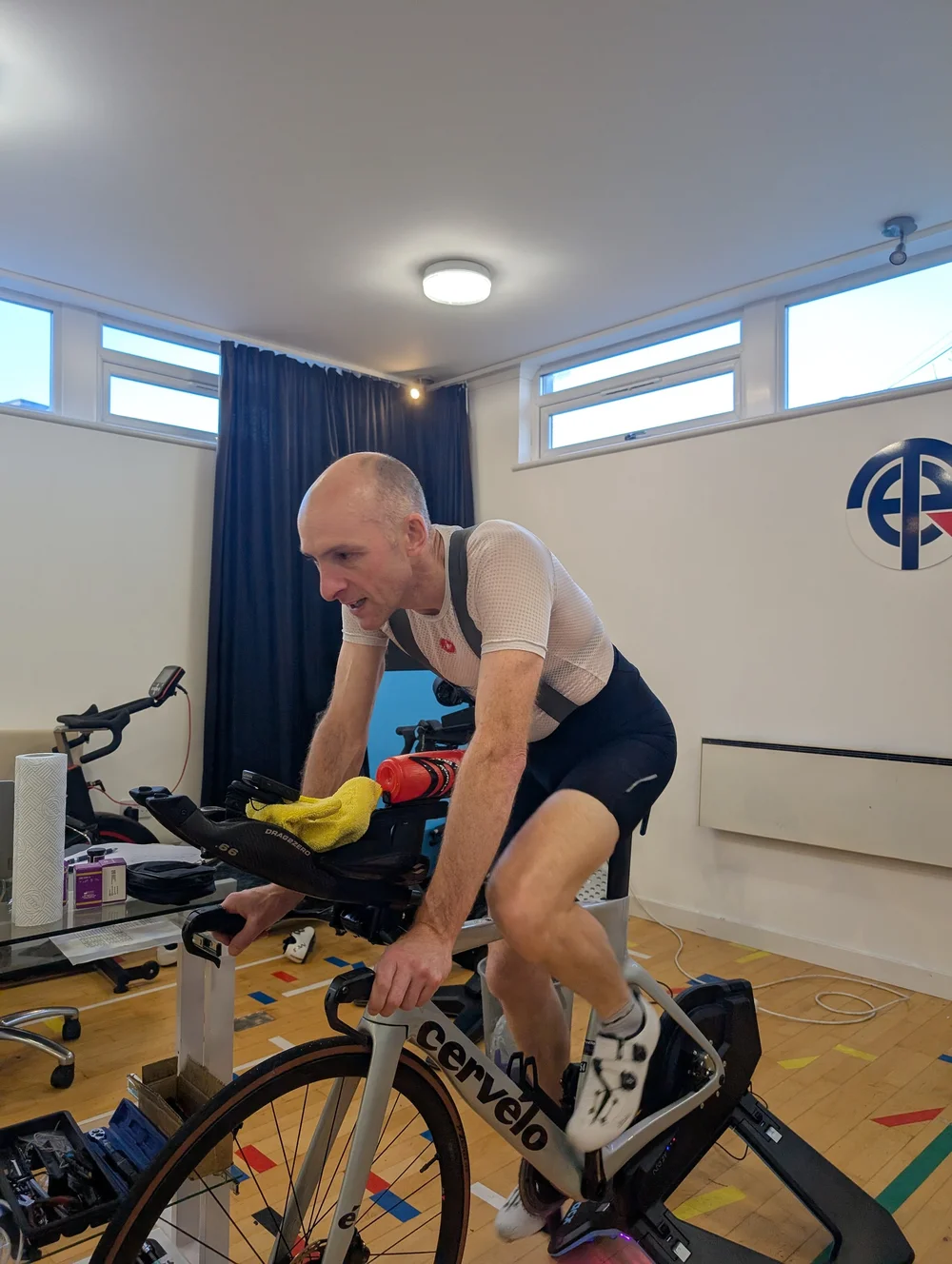
Our Aberdeen lab
Your own bike on our smart trainer, and our treadmill. Controlled, repeatable and easy to compare when you retest.
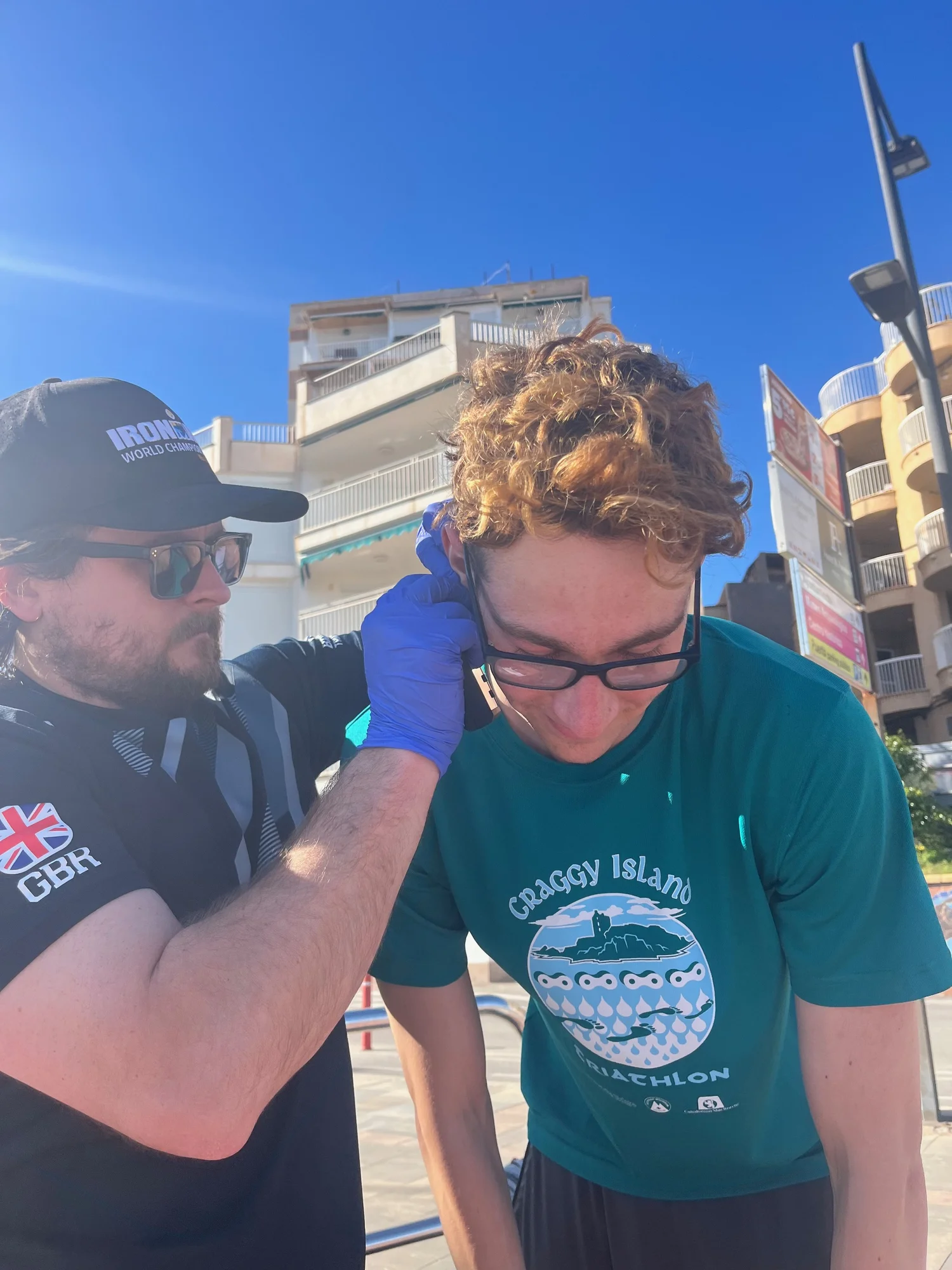
Out on the road
Your own bike on a quiet road, plus a run. Ideal for a follow-up test, to see how your lab numbers transfer outside.
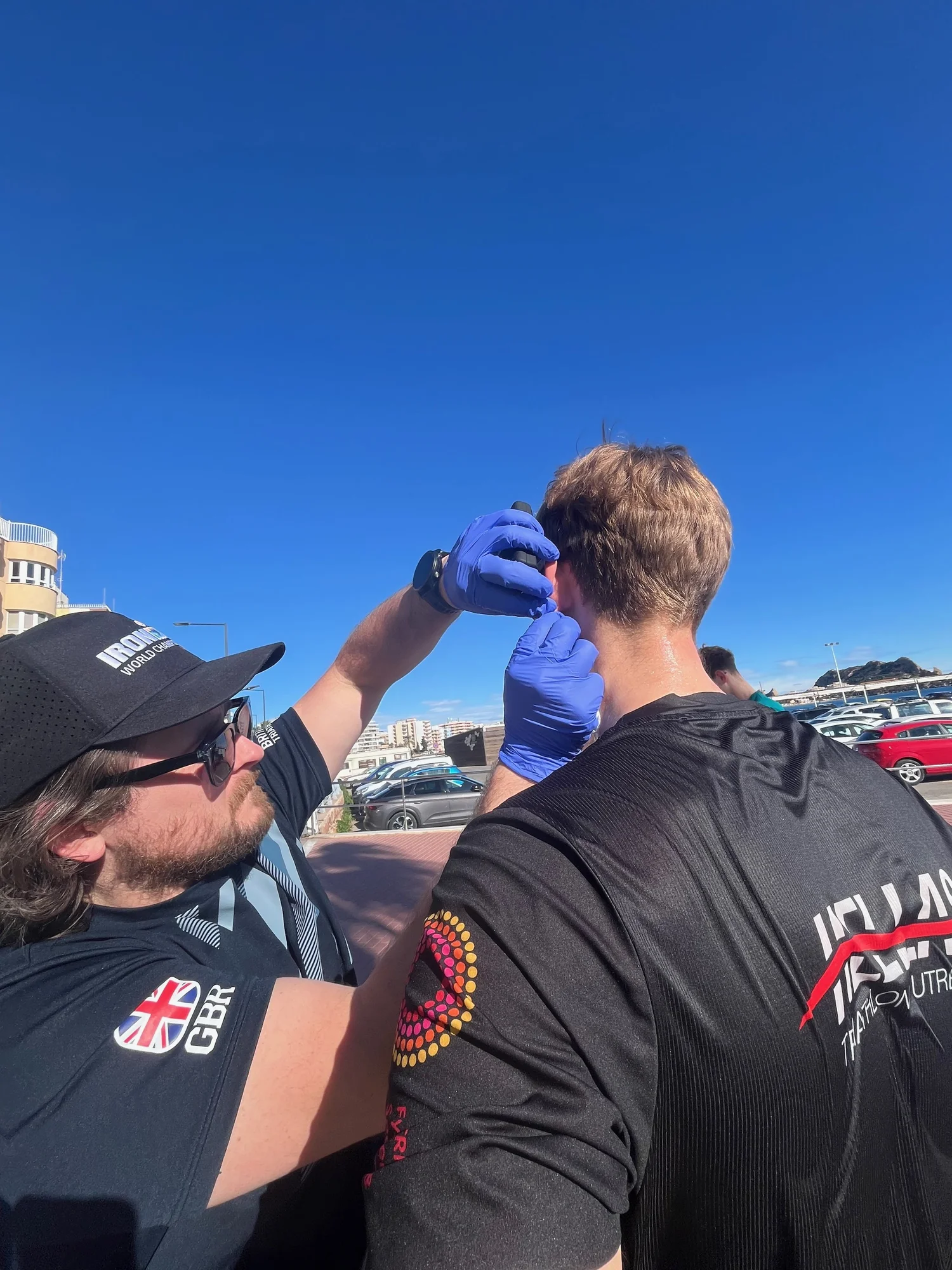
Bring your club or group
Several of you racing the same event? We can test you together, in the lab or outdoors.
Every athlete gets
- Their own race power and run pace
- A fuelling target for race day and every session
- Training zones from their test
- A results debrief with a coach
Testing as a group?
Tell us about your club or training group and your race, and we'll plan a session around you.
When to test
There's no wrong time to test. The sooner you know your numbers, the more of your training uses them.
Initial test
Understand your physiology in more detail, learn what's limiting you on the bike and run, and see exactly where your training focus should be.
Train based on your physiology
Every session targeted to improving your fitness: the exact interval intensity, the right recovery and fuelling targets for every long ride and brick session.
8–10 weeks out
Follow-up test, in the lab or on the road. Confirm what's moved and fine-tune your race power, pace and fuelling.
Race day
You know your power, your pace and your fuel. No surprises on the run.
Don't wait until you feel 'fit enough'. Test now and give yourself more time to make improvements.
Book your assessmentQuestions triathletes ask us
What happens during the test?
You'll ride and/or run through a series of short stages that gradually get harder. We take measurements at each stage, and from those we work out your threshold, VO2 max, glycolytic power and fuel use at every intensity.
Do I need to bring my own bike?
Yes. We test you on your own bike on our smart trainer, so your numbers match the bike you race on. You don't need a power meter in the lab. For outdoor testing, your bike needs one.
Should I test on my TT bike or road bike?
Whichever you'll race on.
How should I prepare?
No hard training for 48 hours beforehand. Eat normally, have a light meal 2–3 hours before, and arrive well hydrated. Bring your bike, cycling and running kit, and the shoes you train in.
When do I get my results?
Within 48 hours, explained by a coach.
Is it suitable for my first 70.3?
Yes. First-timers often gain the most, because pacing and fuelling are where first races usually go wrong.
Can I test only the bike or only the run?
Yes. Book the Bike or Run assessment. The combined assessment gives you the full race picture, includes running economy and saves £75.
What's the best training plan for a half ironman?
One built on your own numbers. Most half ironman training plans use generic zones from a field test or a percentage of threshold, which can leave you going too hard on easy days and not hard enough in key sessions. Your test gives you power and pace zones from your own physiology, and our 16-week plan uses them from day one.
How much should I eat during a half ironman?
It depends on how much carbohydrate you burn at race intensity, and that varies a lot between athletes. Many people land somewhere between 60 and 90 grams per hour on the bike, but your test measures your own fuel use, so you get a target you can practise in training and rely on during the run.
Your race date is fixed. Your training shouldn't be a guess.
Find out your race power, your run pace, how much to fuel and what to train, before another winter goes by.
Not sure yet? Talk to a coach
Book a free 15-minute call. We'll talk through your race, your training and which assessment is the right next step.
On the call we'll cover
- Your race, your goal time and where you are now
- Which assessment and add-ons make sense for you
- When to test, based on your race date
- Coaching, and group or club testing
Fill in the form below and a coach will get back to you to arrange a time.