

Is your marathon goal time realistic?
First marathon or chasing a PB, we'll test you and show you exactly what it will take to make your next marathon a PB: whether your goal time will hold for 26.2 miles, how to fuel it, and why the same injury keeps coming back. Then every session is set by your own body: what to run, how fast, for how long and how long to rest.
Tested in our Aberdeen lab, or at your club, track or on the road.
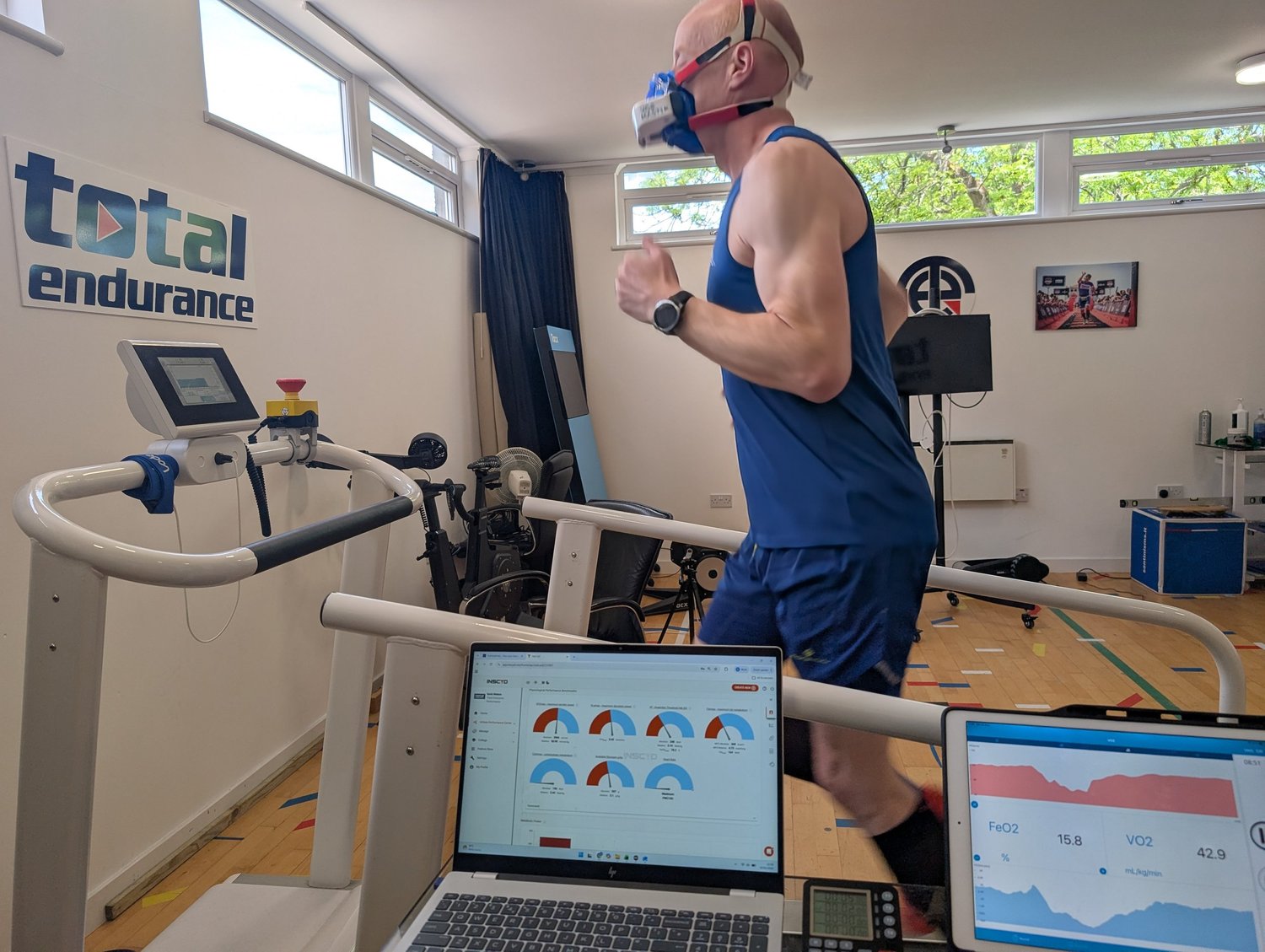
Why do you hit the wall at 20 miles?
Most runners we test aren't short of fitness. They've done the miles, but they've spent 16 weeks training the wrong thing. Pick the one that sounds like you and see how race day plays out.
Goal pace too ambitious
Your goal pace is using too much of your engine. Much over 75% of your VO2 max and it feels fine for ten miles, then at 19 or 20 it starts to unravel.
What percentage of your VO2 max your goal pace uses, so you know whether it's on before you spend 16 weeks chasing it.
Generic plans give every runner the same sessions
A plan from a book, an app or a forum doesn't know your physiology, so it can't tell you what you specifically need to get faster. Our testing measures exactly how your body works, then tells you what to do about it.
Is my goal pace realistic?
We'll show you how much of your engine your goal pace uses. Either you've got margin to spare, or you find out now rather than at mile 20, while there's still time to do something about it.
Which sessions will make me faster?
Two runners with the same VO2 max can need the opposite sessions. Your results show what's limiting you, so every interval has a job: lifting your engine, cutting your carb burn or making each kilometre cheaper.
How much should I eat on race day?
The runners we test burn anywhere from 50 to 190 g of carbs an hour at marathon pace. We'll measure yours and turn it into a grams-per-hour target, so you know exactly how many gels to take.
Why does the same injury keep coming back?
Nearly 4 in 10 marathon runners who book with us mention injury. Often it's the same niggle at the same point in every build-up. A video biomechanical analysis shows what in your running form is overloading you, so your 16 weeks build fitness, not another injury.
Your sessions, set by your physiology
A generic plan gives everyone the same intervals. We set yours from your test: what to run, how fast, for how long, and how long to rest. Here's what that looks like for two runners with the same VO2 max, training for the same marathon.
A generic plan says
6 x 800 m at threshold pace, 90 seconds rest.
What's threshold pace? Is 90 seconds right for you? The plan doesn't know, because it's never seen your body.
Runner A's plan says
5 x 1 km at 3:35/km, with 3 minutes jogging at 6:00/km between.
Why: at this pace his engine works hard without his carbohydrate burn rate taking over, and 3 minutes is how long he needs to clear the lactate before the next rep.
Runner B's plan says
Up to 16 x 40 seconds at 3:40/km, with 20 seconds rest.
Why: she burns carbohydrate at a very high rate. The short rests let lactate build on purpose, which switches that system down and forces her aerobic engine to do the work.
Same VO2 max. Same marathon. Completely different sessions. That's what your test gives you.
What we change, depending on what we find
Your test shows what's holding your marathon back. Your training then targets it directly, so every session has a reason to be in your week.
What your test tells you
One session in our lab measures the four things that decide your marathon, then we translate every number into a pace you can run to.
VO2 max
Your engine. How much oxygen you can use, which sets the ceiling on what's possible for you over 26.2 miles.
Glycolytic power
Your fuel burn. How quickly you get through carbohydrate. When it's high, the tank empties early, and it's one of the main reasons good runners fade in the last 10k.
Fuel use at race pace
Your fuel needs. How many grams of carbohydrate and fat you burn every hour at your goal pace. This becomes your fuelling plan.
Threshold and sustainable pace
Your sustainable pace. Where your threshold sits, and the fastest pace you can hold from start to finish without tipping over it.
- Goal time
- 3:45(5:20 /km)
- Sustainable race pace
- 5:14–5:22/km
- Threshold pace
- 4:58/km
- Carbohydrate burned at race pace
- 68g/hr
- Race-day fuelling target
- 60–70g/hr
- VO2 max
- 54ml/kg/min
- Running economy at race pace (add-on)
- 220ml/kg/km
Book your marathon test
Three ways to book. Every option includes a full lab test in Aberdeen and a one-to-one debrief with a coach.
Marathon Test
The answers you need before you commit to 16 weeks.
- ✓Full lab test VO2 max, threshold and fuel use
- ✓Your realistic race pace and whether your goal time is on
- ✓Your fuelling target grams of carbs per hour at race pace
- ✓Your training paces easy, steady, marathon, threshold and interval
- ✓One-to-one debrief with a coach
Marathon Test + Running Economy
The full answer to "is my goal pace achievable?"
- ✓Everything in the Marathon Test
- ✓Running economy how much oxygen each kilometre costs you at race pace
- ✓Why it matters two runners with the same VO2 max can finish 20 minutes apart, and economy is often why
Complete Marathon Package
Test, injury check and your 16-week plan, done.
- ✓Marathon Test + Running Economy
- ✓Biomechanical analysis video of your running form, what is costing you energy or causing injury
- ✓16-week plan in TrainingPeaks every key session built from your results
- ✓Mid-plan review and discounted week-16 retest
- ✓Saves £45 against booking each part separately
Booking the £195 option? Choose the Marathon Test, then tick running economy at checkout. You can add biomechanics (+£65) or the 16-week plan (+£84) there too.
Racing in the summer? Test now and find out what to work on. We build your 16 weeks back from race day, so your plan starts when it should.
Buying for a runner? Our Christmas gift voucher covers the Marathon Test with running economy (£195) and is valid for 12 months. Buy a gift voucher
Same goal. Very different answers.
Four marathon runners we've tested. All wanted to run faster, but each had a different limiter, so each got different training.
Lindsay, Aberdeen
What we found: Close to sub-20 for 5K, but she faded in anything longer. At marathon pace she was burning about 190 g of carbohydrate an hour, and even easy runs cost 90 g.
What we changed: We cut the strides, sprints and explosive gym work that kept her glycolytic rate high, moved easy volume onto the bike and hills, and switched to short reps with short recoveries.
Malcolm, Inverurie
What we found: His threshold already sat at 91% of his VO2 max, so more threshold running had very little left to give. At his old 10K pace he was using 82% of his engine.
What we changed: We lifted the ceiling instead: longer VO2 max reps, then marathon-pace work that builds week by week.
Andrew, Stonehaven
What we found: One of the most economical runners we have tested: every kilometre costs him very little oxygen. But his threshold sat at about 95% of his VO2 max, and his 12 x 400 m sessions barely touched it.
What we changed: 3 x 8 minutes at VO2 max pace, plus a few 20-second sprints.
Scott, Aberdeen
What we found: His economy is good and his engine is reasonable, with room to grow. His carbohydrate burn is fine at moderate intensities but climbs at the higher end. The biggest issue: he was running his intervals too quickly.
What we changed: More sub-threshold intervals, going longer rather than faster and held at the right intensity, with fuelling practice for the harder sessions.

The test data helped me understand why I struggled the last 10km — the intensity was slightly too high to achieve for the marathon. I have been focused on improving my VO2 max and running economy to help make me faster and more efficient and look forward to comparing my results.
Ruth, Banchory · targeting a good-for-age time for the London Marathon
When to test
Your race date is fixed. Test early enough that every week of training uses your numbers.
Initial Test
Understand your physiology in more detail, learn whats limiting you and exactly where the training focus should be.
Train based on your physiology
Every session targeted to improving your fitness - the exact interval intensity, the right recovery duration and fuelling targets for on every long run.
8–10 weeks out
Follow-up test. Confirm what's moved and fine-tune your race pace.
Race day
You know your pace, your fuel and your plan. No surprises at mile 20.
Don't wait until you're 'fit enough'Test now and give yourself more time to make improvements.
Book your testIn our lab, at your club or out on the road
Test on your own in our lab, or bring your running club, training group or a few of you chasing the same spring marathon. We'll come to you and test the whole group in one session, and every runner still leaves with their own numbers.
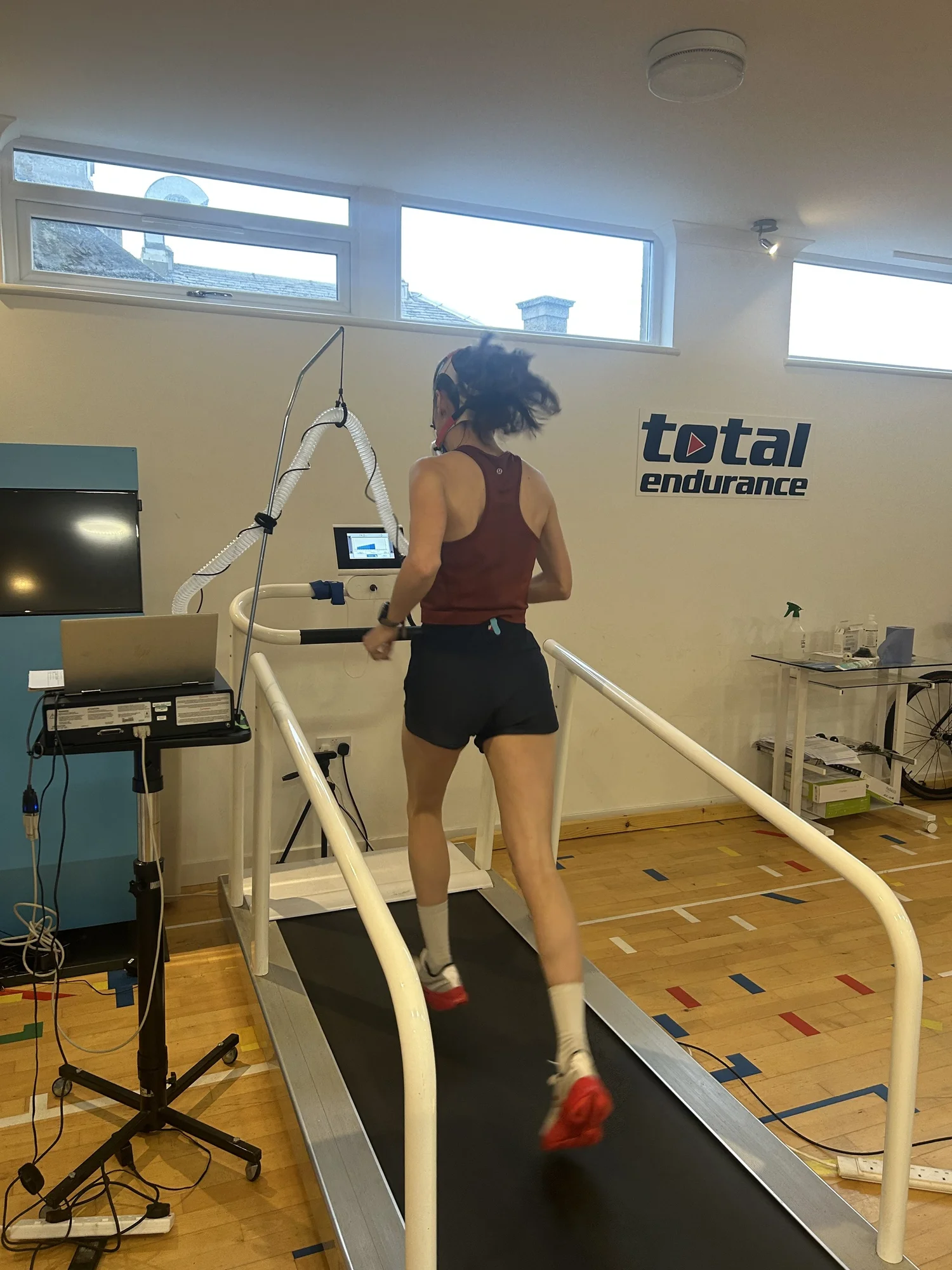
Our Aberdeen lab
Come on your own or bring your group. Full lab kit, including the running economy add-on.
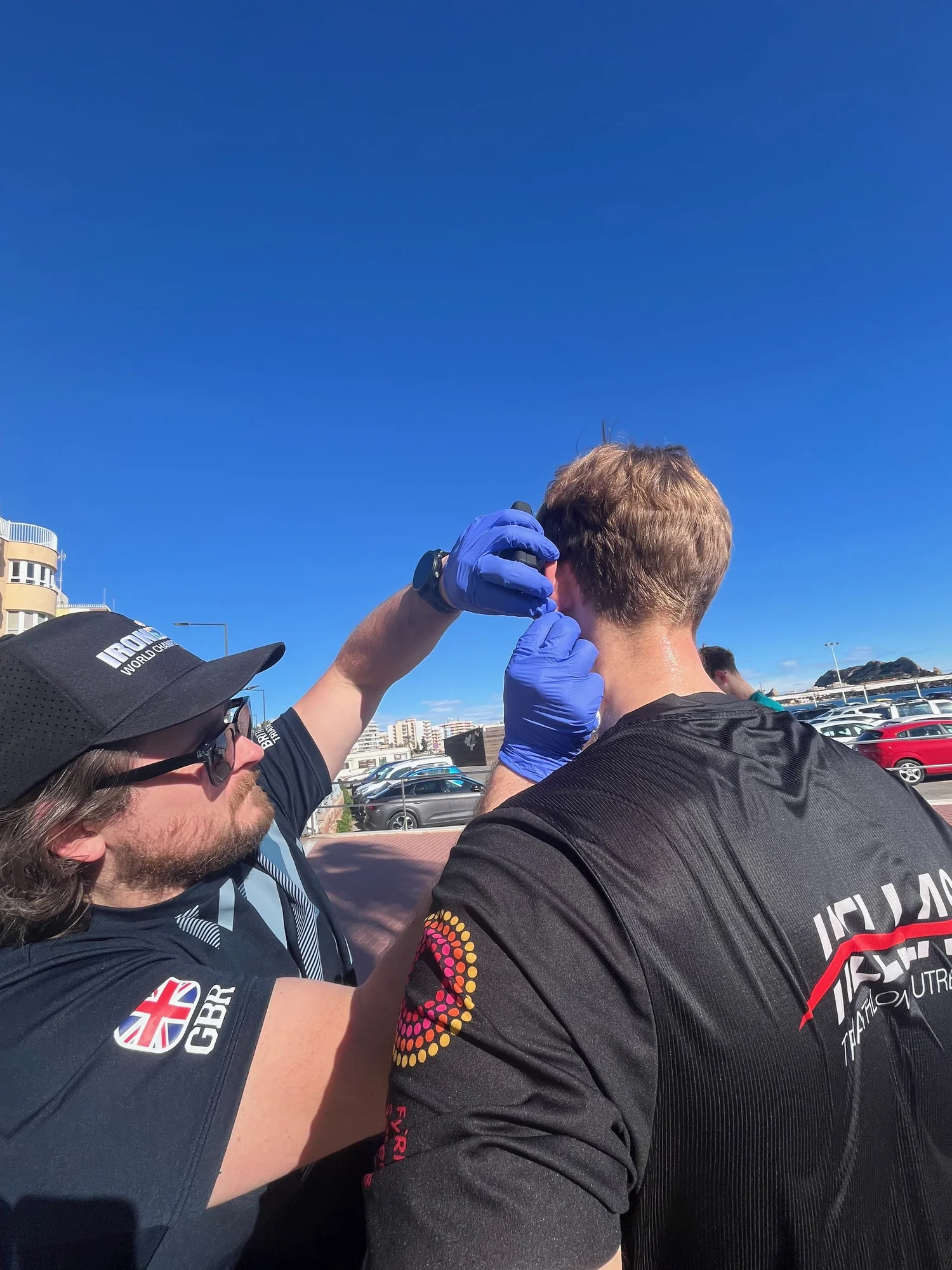
A running track
We bring the kit to the track and test the whole group in one session.
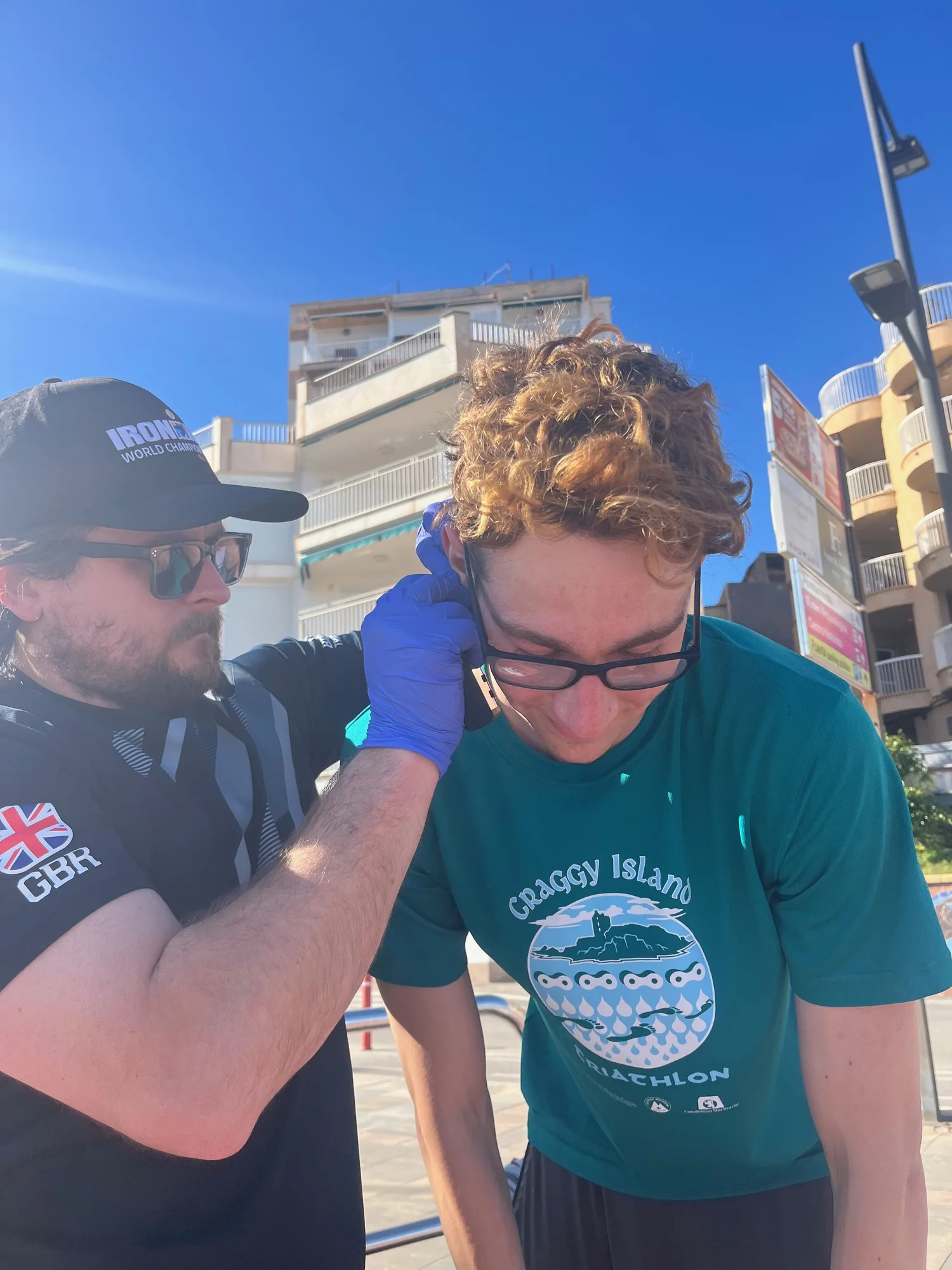
A flat stretch of road
All we need is a relatively flat route where we can run your target intervals.
Every runner gets
- Their own race pace range
- A personal fuelling target
- Training paces for their marathon block
- A results debrief with a coach
The bigger the group, the better the rate
Tell us your group size, your race and what you're looking for, and we'll put together a package.
Request a group quoteQuestions runners ask us
My marathon isn't until the summer. Is it too early to test?
No, testing early is better. You'll know what's holding you back while there's time to fix it. If you add the 16-week plan, we build it back from race day, so it starts when it should. Many runners retest just before their plan begins.
I keep getting injured. Will the test help?
Add the biomechanical analysis (or book the Complete Marathon Package). We film you running and show what in your form is overloading you, then build strength work and a sensible build-up into your plan.
I'm new to running or I'm not fast. Is this for me?
Yes. The longer you're out on the course, the more pacing and fuelling decide your result. A four-and-a-half-hour marathoner has more to gain from knowing their fuelling target than almost anyone.
How many gels do I need for a marathon?
It depends on how many carbs you burn at your pace, and that varies a lot. The marathon runners we've tested burn anywhere from about 50 to 190 g an hour at goal pace. Most gels are 20-40 g, so that's the difference between one or two gels an hour and needing more than you could ever stomach. The test gives you your number.
Why do I hit the wall in a marathon?
Usually one of three things: your goal pace is too close to your ceiling, you're burning carbs faster than you can replace them, or each kilometre is costing you too much energy. They all feel the same at mile 20, but the fix is different for each. The test tells you which one it is.
What happens during the test?
After a warm-up you run a series of short stages that get progressively faster, with small finger-prick samples between stages. It's hard towards the end but short, and you're finished well before you'd notice it in your legs the next day.
Is my Garmin VO2 max accurate?
Your watch estimates from heart rate and pace. It can't tell you how fast you burn carbohydrate, where your threshold sits, or how much to eat at race pace, and those are the numbers that decide mile 20.
How far before my marathon should I test?
16 to 20 weeks out is ideal, so your whole block is built on your numbers. A follow-up test 8 to 10 weeks later shows what's improved and lets us sharpen your race pace.
Is the running economy add-on worth it?
If you're chasing a specific time, usually yes. It shows how much energy each step costs you at race pace, which is often the difference between two runners with the same fitness.
Can you test our running club?
Yes. We can test groups in our lab, on a track or on a flat stretch of road. Get in touch with your group size and we'll put together a package.
Your race date is fixed. Your plan shouldn't be a guess.
Find out what pace you can hold, what you need to eat and exactly how to train for it.
Not sure yet? Talk to a coach
Book a free 15-minute call with one of our coaches. Tell us about your race and your goal, and we'll tell you honestly whether testing is the right next step.
On the call we'll cover
- Whether your goal time looks realistic from your recent running
- Which test and add-ons make sense for you
- When to test, based on your race date
- Group or club testing, if you're organising one
Fill in the form below and a coach will get back to you to arrange a time.